
Shop



Summarize this post with:


Newborn Sleep · Active Sleep
Active sleep is the light, dreaming stage of newborn sleep. Your baby may twitch, grunt, flutter their eyes and squirm while still fully asleep. It is normal, it is healthy, and it often makes up about half of a newborn’s sleep. Most of the time, the best response is to wait and watch.
It is 2 a.m. and the room is quiet, except for your baby. They grunt. An arm jerks. Their face scrunches up, then smooths out. You lean over, sure they are waking, and they sigh and go still again.
This is active sleep. Almost every new parent meets it in the first week, and almost every new parent wonders if something is wrong. This guide explains what active sleep is and why babies move so much during it. It also shows how to tell it apart from real waking, and how to set up your room so you can watch without picking your baby up too soon.
Key Takeaways
- 01
Active sleep is the light, dreaming stage of newborn sleep, and it fills about half of a newborn’s sleep.
- 02
Twitches, grunts, uneven breathing and short cries are normal and may help your baby’s brain learn their body.
- 03
Pause for about a minute before you respond, and look for open eyes, a building cry and hunger cues.
- 04
Steady rhythmic jerking, color changes or long breathing pauses need a call to your pediatrician or emergency services.
- 05
A bedside sleeper keeps your baby on their own flat surface within arm’s reach, so you can listen before you lift.
What is active sleep?
Definition
Active sleep — The newborn version of rapid eye movement (REM) sleep. The brain is busy, breathing is uneven, and the body makes small twitches and sounds while the baby stays asleep.
Newborns sleep in two main states. Active sleep is the light, busy state. Quiet sleep is the deep, still state. Adults have the same two kinds of sleep, but babies split their time very differently.
The American Academy of Pediatrics (AAP) explains on its parent site that a newborn’s sleep is about equally divided between active and quiet sleep. During the active stage, a baby’s arms and legs may jerk, and their eyes move under closed lids. Adults spend far less of the night in this light stage.
Newborns also often fall asleep into active sleep first, while adults usually drop into deeper sleep first. That is why your baby can look restless in the first stretch after you lay them down. It is also why the first few minutes are a poor guide to whether they have truly settled.
Active sleep
- ◦Eyes move under closed or half-open lids
- ◦Breathing is uneven, with short pauses and quick catch-up breaths
- ◦Twitches in the face, fingers, arms and legs
- ◦Grunts, squeaks, sighs and brief cries
- ✗Easier to wake if you pick the baby up
Quiet sleep
- ◦Eyes still, lids fully closed
- ✓Slow, deep, even breathing
- ✓Body loose and still, with few movements
- ✓Few sounds apart from steady breathing
- ✓Harder to wake, which makes it the best time to move or check them
Why do babies twitch in their sleep?
For years, sleep twitches were treated as random noise. Researchers now think they may help a baby learn their own body. Each twitch sends a signal back to the brain, a bit like a quick map check of each finger and toe.
A team at the University of Iowa filmed 22 sleeping infants aged from about one week to seven months. Their paper, published in Current Biology in 2021, found twitching across the body during active sleep. From about three months, twitches also began to show up in quiet sleep, timed with bursts of brain activity called sleep spindles.
In plain terms, the twitching you see is not a sign of a problem. It looks like part of normal brain and body growth. As your baby gets older, the pattern changes, and they spend less of the night in the light, jerky stage.
The twitching you see at 2 a.m. is not a sign of trouble. It looks like part of how a growing brain learns the body it lives in.
babybayWhy do newborns grunt and make noise while sleeping?
Newborn sleep is loud. Grunts, squeaks, snorts and whimpers are all common in active sleep. Several things feed into the noise, and most of them are simple body mechanics.
Small noses and narrow airways make breathing sounds louder. Uneven breathing in active sleep adds sighs and short pauses. Digestion keeps working at night, so a full tummy or trapped gas can bring grunts and wriggles. Many newborns also grunt as they learn to push, which can sound like effort even when nothing is wrong.
A short cry in the middle of active sleep often fades within a minute. If you rush in at the first sound, you can wake a baby who was never really awake. Waiting a moment gives them the chance to drift back on their own.
01
Breathing sounds
Small airways make soft whistles, snorts and snuffles that are louder than an adult’s breathing.
02
Uneven rhythm
Short pauses followed by a few quick breaths are typical of active sleep in a healthy newborn.
03
Digestion
Gas and a working gut can bring grunts, squirms and leg pulls during the light stage.
04
Dream sounds
Brief whimpers or a single cry can pass in seconds without the baby waking.
Active sleep vs waking up: how to tell the difference
This is the question that matters most at night. If your baby is in active sleep, picking them up can wake them fully. If they are truly awake and hungry, waiting too long can turn a quiet stir into a full cry. A short pause and a few clues will usually tell you which one you are seeing.
Step 1Pause and count to sixty
When you hear a noise, stay still for about a minute. Many active-sleep sounds stop on their own in that time.
Step 2Look at the eyes
Eyes moving under closed or half-closed lids point to active sleep. Wide-open, focused eyes that look around point to waking.
Step 3Watch the cry
A short whimper that fades is often a sleep sound. A cry that builds and keeps going is a baby asking for you.
Step 4Check for hunger cues
Rooting, sucking on hands and turning the head side to side are signs your baby is waking to feed.
Step 5Respond calmly
If they are awake, keep lights low and voices soft. A calm night feed helps them settle back to sleep.
Over a few weeks you will learn your own baby’s patterns. Some babies grunt loudly in every light phase. Others barely make a sound until they are hungry. The point is not to ignore your baby. It is to give them a moment before you step in.
If your baby seems to save their wakeful hours for the night, the busy sleep you see may be part of a bigger pattern. The guide to newborn day and night confusion explains why young babies mix up their clocks and how daylight and calm night feeds help.
How long does active sleep last?
In the newborn weeks, active sleep takes up a large share of the day and night. Babies move between active and quiet sleep many times, in cycles much shorter than an adult’s. That is why a newborn can seem to stir every hour or so, even on a good night.
As the months pass, the balance shifts toward quiet, deep sleep. The Iowa study shows how much sleep changes in the first half year, with new patterns appearing at about three months. Many parents notice that the constant grunting and squirming of the first weeks eases as their baby grows.
Weeks 0–6
The busiest stage
Sleep is split roughly evenly between active and quiet sleep. Twitches, grunts and short cries are common through the night.
Weeks 6–12
Patterns start to form
Longer stretches begin to appear, often at night. Active sleep is still common, especially just after falling asleep.
Around 3 months
Sleep matures
Researchers see new brain rhythms in quiet sleep, and twitches start to show up there too.
3–6 months
Quieter nights
Deep sleep takes a larger share. Many babies grunt and squirm less, though every child is different.
Is active sleep normal, and when should you worry?
Twitches, grunts and uneven breathing during sleep are expected in healthy babies. Still, a small number of movements are not sleep twitches. Knowing the difference lets you relax about the normal ones and act quickly on the rare ones.
Keep in mind
Call your pediatrician or emergency services if you see
- Important
Rhythmic jerking that keeps going when you gently hold the arm or leg, or that continues once your baby is awake.
Note the time it starts and stops, and record a short video if you can.
- Important
Blue or gray color around the lips or face, or a long pause in breathing that does not end on its own.
Call emergency services right away.
- Caution
Stiffening of the whole body, eyes rolling back, or a baby who is hard to wake or floppy.
Call your pediatrician the same day, or sooner if it repeats.
- Caution
Constant grunting with every breath while awake, flaring nostrils, or the chest pulling in with each breath.
These can be signs of breathing trouble. Get your baby checked promptly.
Normal sleep twitches stop when your baby wakes. They are quick and scattered, not steady and rhythmic. If you are ever unsure, trust your instinct and call your pediatrician. No doctor minds a call about a newborn.
Should you pick up a baby in active sleep?
Usually, no. A baby in active sleep is still asleep. Lifting them is one of the quickest ways to turn a light phase into a full wake-up. Give them a minute or two first, unless anything in the warning list above applies.
This matters most when you are trying to move a sleeping baby from your arms to their own sleep space. Wait for the signs of quiet sleep: still eyes, slow breathing and loose, heavy limbs. Then lay them down on their back. If your newborn only seems to settle on your chest, the step-by-step guide to helping them sleep in the bassinet walks through the transfer.
Comfort plays a part too. A baby who is too warm or too cool may squirm more in light sleep. Light, layered sleepwear helps, and you can check room temperature and layers in the chart of what newborns wear to sleep.
Night tip
Use your ears before your hands
Keep your baby close enough to hear every grunt. That way you can listen, wait a moment and only reach in when they are truly awake.
Why a bedside sleeper makes active sleep easier on you
Active sleep is a listening game. The parents who cope best with it are the ones who can hear and see their baby without getting up. That is hard when the baby sleeps across the room, and it is unsafe when the baby sleeps in your bed.
The AAP’s 2022 safe sleep guidance recommends that babies share their parents’ room, ideally for at least the first six months, but sleep on their own separate surface. It also calls for a firm, flat surface, back sleeping and nothing soft in the sleep space. A bedside sleeper meets both goals at once.
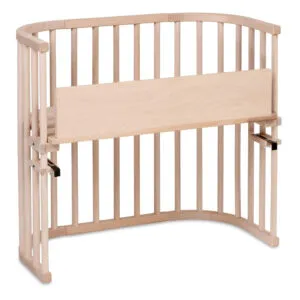
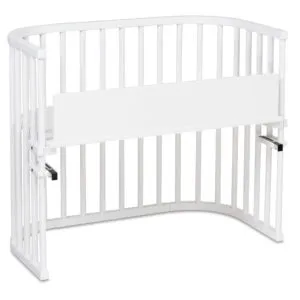
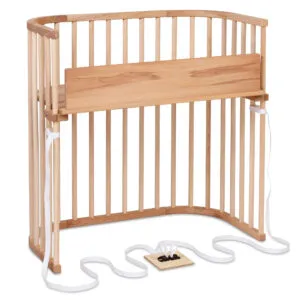
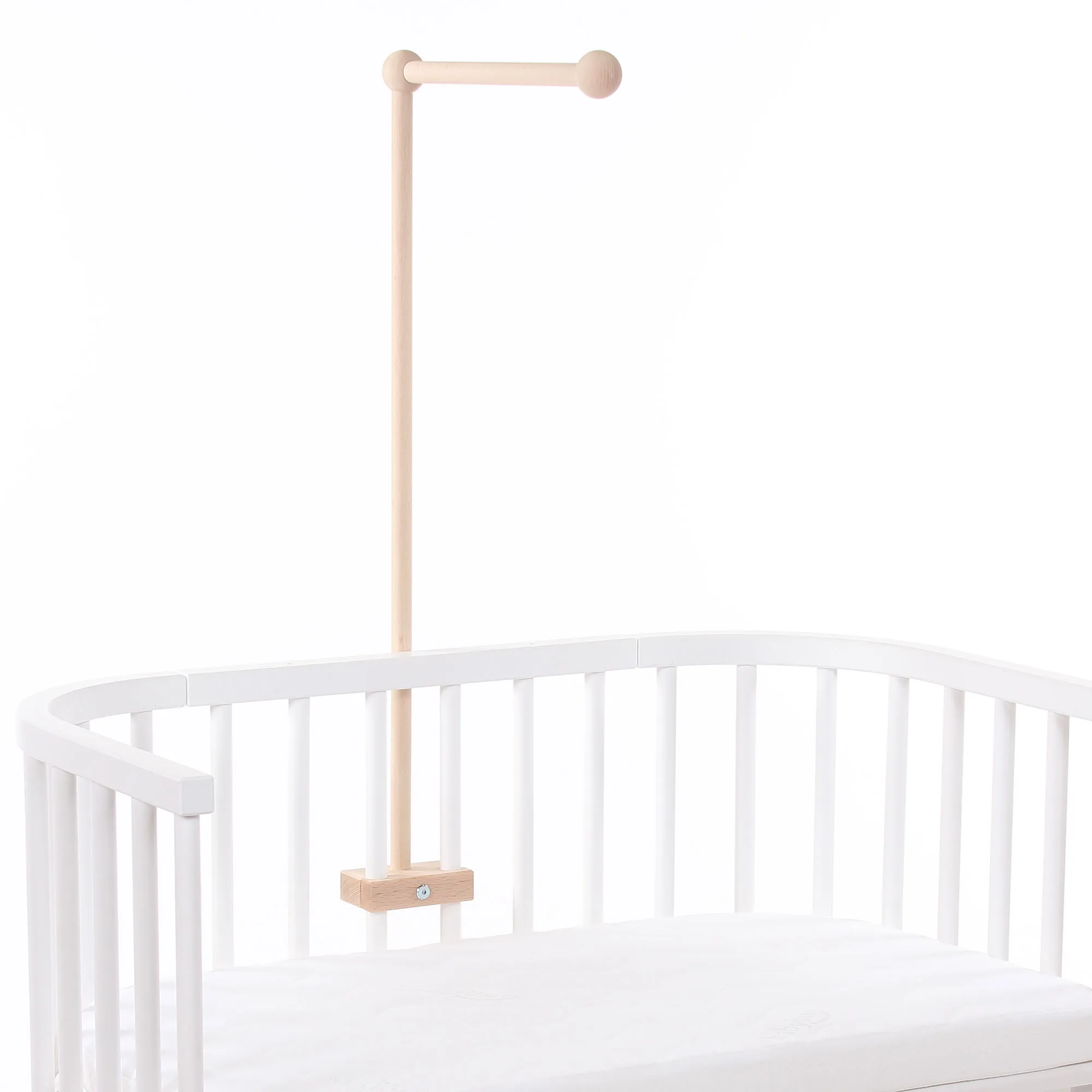
The babybay beechwood bedside sleepers sit flush against the side of your bed, open on your side. Your baby has their own firm, flat space, and you are at arm’s length. You can hear every grunt, see every twitch and wait out a light phase from your pillow. When your baby truly wakes, you can reach over, feed and settle them without a walk across a dark room.
- Material
- Solid European beechwood with water-based finishes, no plastic and no netting
- Safety
- Meets the United States Consumer Product Safety Commission (CPSC) rules and the bassinet standard from the American Society for Testing and Materials (ASTM)
- Original
- Fits most beds up to 28 inches high
- Maxi
- A wider sleeping platform for one baby, for beds up to 28 inches high
- Maxi Tall
- Built for boxspring beds up to 34.75 inches high
- Later use
- Converts to a freestanding bassinet with the conversion kit
- Warranty
- 10 years, made in Germany
For most standard beds, the babybay Original bedside sleeper is the place to start. It brings your baby level with you, so a quick glance tells you whether that squirm is active sleep or a real wake-up. If your bed sits high on a boxspring, the Maxi Tall for boxspring beds reaches the same flush, level fit.
A simple night plan for active-sleep stirs
Here is a worked example of a typical night with a three-week-old. It shows how waiting a moment can protect your own sleep as well as your baby’s.
At 11 p.m., your baby feeds and falls asleep in your arms. Their eyes flicker and their fingers twitch, so you wait. Ten minutes later their breathing slows and their arms go heavy. You lay them on their back in the bedside sleeper.
At 12:30 a.m., you hear a grunt and a squeak. You stay still and watch from your pillow. Their eyes move under closed lids and the noise fades. They are in active sleep, so you let them be.
At 2:10 a.m., the sounds build. Your baby roots and sucks on a fist, and the whimper turns into a steady cry. This is waking. You reach over, feed them with the lights low, then lay them back down once they are deeply asleep.
QIs it normal for my baby to twitch a lot in their sleep?
Yes. Twitching in the face, hands, arms and legs is common in active sleep and usually means your baby is in a light, dreaming phase. Normal twitches are quick and scattered, and they stop when your baby wakes.
QWhy does my newborn grunt all night?
Small airways, uneven breathing in light sleep and a busy gut all add up to a lot of noise. Grunting during sleep is common in healthy newborns. Constant grunting with every breath while awake, or with flaring nostrils, should be checked by your pediatrician.
QHow can I tell if my baby is in active sleep or awake?
Look at the eyes and listen to the cry. Eyes moving under closed lids and sounds that fade within a minute point to active sleep. Open, focused eyes, rooting and a cry that keeps building mean your baby is awake.
QShould I wake my baby during active sleep?
No. A baby in active sleep is still asleep, and picking them up often wakes them fully. Wait for clear waking signs, unless your doctor has asked you to wake them for feeds.
QDo babies dream during active sleep?
Nobody can ask a newborn, so no one knows for sure. Active sleep is the baby version of the dreaming stage in adults, but researchers now think the twitches mainly help the brain map the body.
QWhen does active sleep decrease?
The share of active sleep falls over the first months. Around three months, sleep patterns mature and deep sleep takes up more of the night, so many babies grunt and squirm less.
QCan sleep twitches be a seizure?
Rarely. Sleep twitches are brief and irregular and stop when your baby wakes. Rhythmic jerking that continues when you gently hold the limb, or when your baby is awake, needs a prompt call to your pediatrician.
Sleep close, sleep safe
Hear every grunt without leaving your bed
A babybay bedside sleeper keeps your baby on their own firm, flat beechwood surface, right beside you. Find the model that fits your bed height.