Summarize this post with:


Choosing a Bassinet · Fit & Care
There is no standard bassinet mattress size. Most fall between about 15 x 30 in and 18 x 36 in, and every brand sizes its own. The only reliable method is to measure your own sleeping platform and buy the pad and sheet made for that model.
Last updated
The short version
- 01
There is no standard. Bassinet mattresses commonly run 15–18 in wide by 30–36 in long, and shapes vary from rectangular to oval to hourglass.
- 02
A crib mattress will not fit a bassinet and must never be cut down to make it fit — trimming destroys the edge structure the pad depends on.
- 03
Buy the pad made for your model. A pad that leaves a gap at any edge, or that has to be forced in, is the wrong pad.
- 04
Use a fitted sheet only, with the elastic fully under the pad. Nothing else belongs in the sleep space — not a topper, not a folded blanket, not a flat sheet.
- 05
Two to four fitted sheets is the practical number for one sleeper. A waterproof protector goes under the fitted sheet, never over it.
Is There a Standard Bassinet Mattress Size?
No — and this is the single most useful thing to know before you buy anything. Crib mattresses are standardised in the United States, so a full-size crib sheet fits any full-size crib. Bassinets are not. Each maker designs its own sleeping platform, so the pad is part of that specific product rather than a commodity you can buy on dimensions alone.
What you can rely on is a range. Most bassinet sleeping platforms fall somewhere between roughly 15 and 18 inches wide and 30 and 36 inches long. Shapes vary too: rectangular with rounded corners is the most common, but oval and hourglass platforms exist, and a rectangular pad will never sit correctly in an oval frame regardless of how close the numbers look.
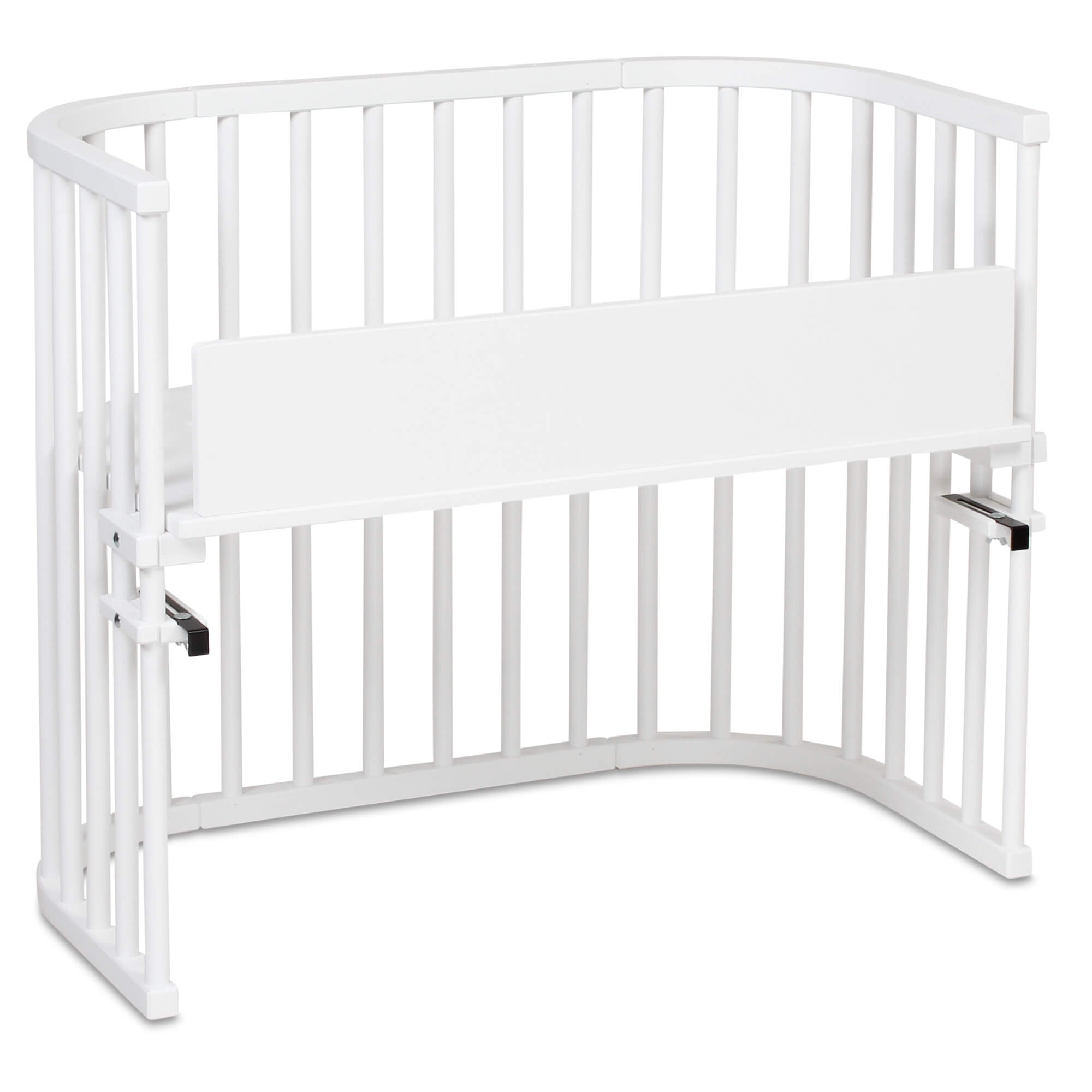
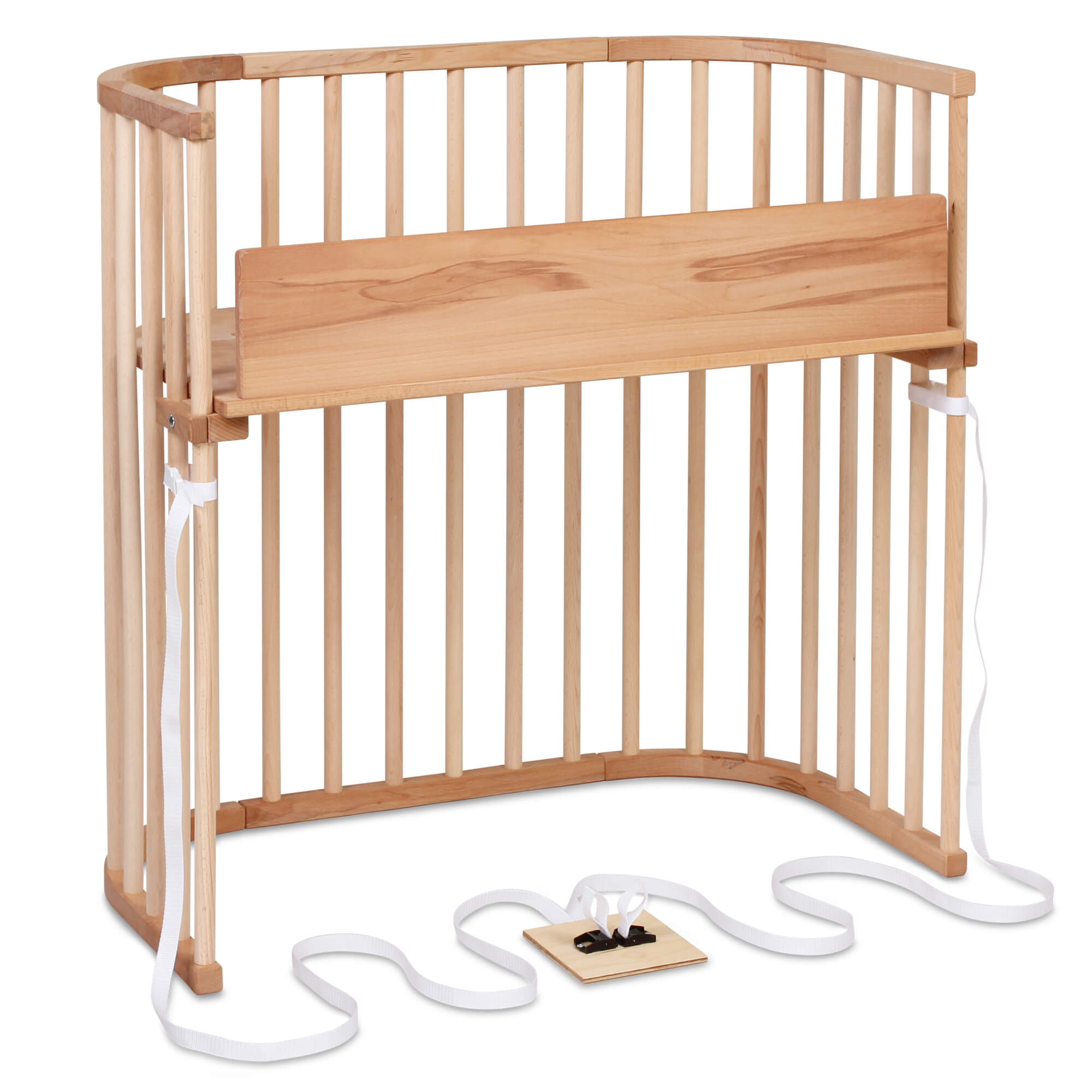
The babybay Original, for example, has a published sleeping platform of 32 x 16 in. That number is useful for planning where the sleeper will go, but it is not an instruction to go and buy any 32 x 16 pad — the corner radius, the edge profile and the thickness all have to match as well. Everything across the babybay bedside sleeper collection is sized to its own platform for exactly this reason.
The one thing never to do
Never cut a mattress down to fit
Trimming a crib or foam mattress to bassinet dimensions destroys the sealed edge and the structure that keeps the surface firm right to the perimeter. It leaves a soft, compressible edge exactly where a gap is most dangerous. If a pad does not fit as manufactured, it is the wrong pad.
Bassinet Mattress Size Ranges and Shapes
Because the market has no standard, the honest version of a size chart is a chart of ranges and shapes rather than a list of brand numbers — brand dimensions change between model years, and a chart that is six months stale is worse than no chart at all. Measure your own platform, identify which row you are in, and then buy the pad the manufacturer makes for it.
Common bassinet platform sizes and what fits them
Common US market sizing; babybay published platform dimensions
| Platform type | Typical size range | Sheet type that fits | Notes |
|---|---|---|---|
| Compact rectangular | 15 x 30 in – 16 x 32 in | Bassinet fitted sheet | The most common bedside-sleeper size band; babybay Original sits here at 32 x 16 in |
| Wide rectangular | 17 x 33 in – 18 x 36 in | Large bassinet fitted sheet | Wider sleeping platforms for one baby; check length as well as width before ordering |
| Oval | approx. 15 x 30 in equivalent | Oval-cut fitted sheet only | A rectangular sheet will bunch at the ends — bunched fabric is loose bedding |
| Hourglass / figure-eight | varies by maker | Model-specific sheet only | Effectively no aftermarket option; buy from the maker |
| Travel / soft-sided | smaller, varies | Model-specific sheet only | Frames flex, so a firm aftermarket pad may not seat correctly |
How Thick Should a Bassinet Mattress Be?
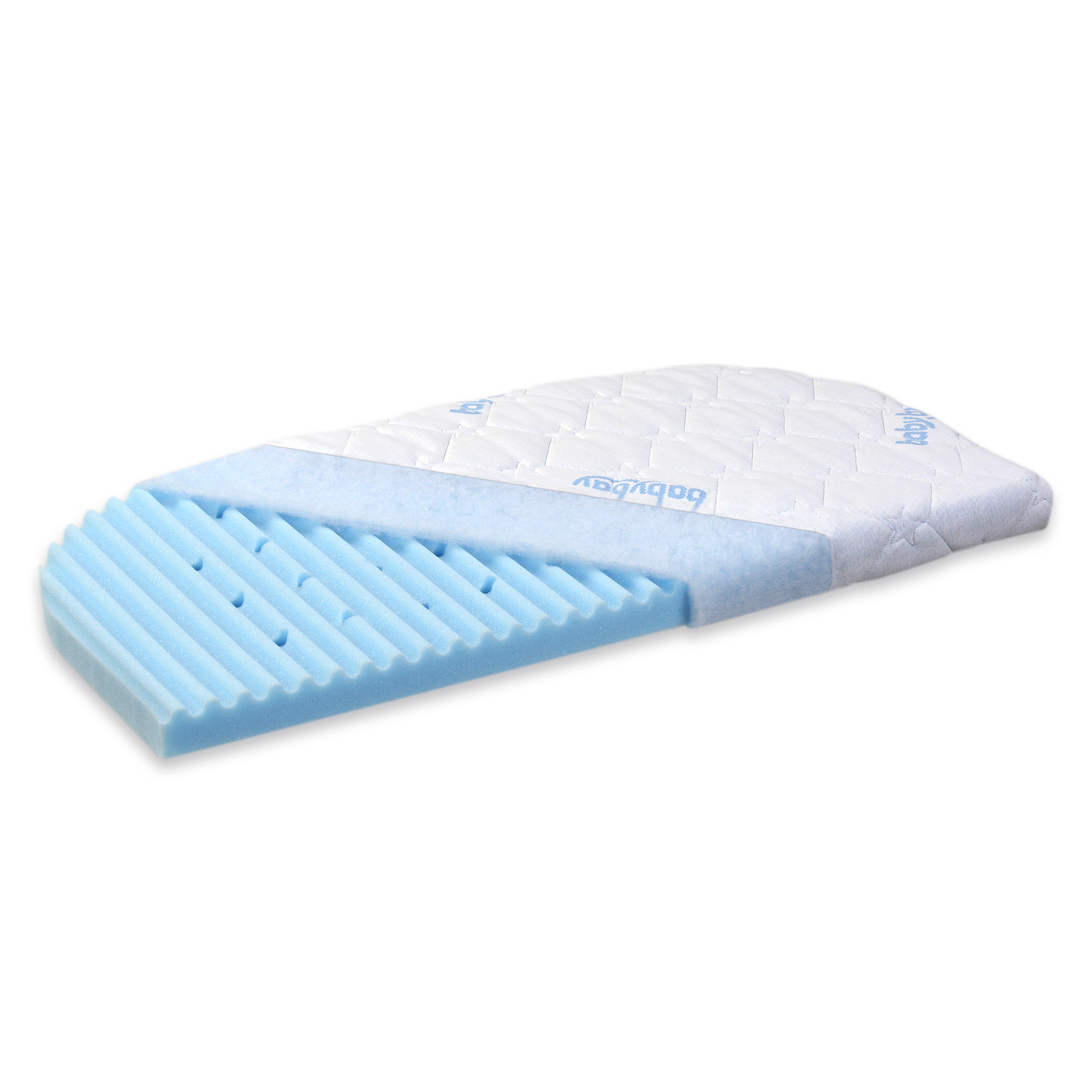
Thin and firm, and supplied by the manufacturer. Bassinet pads are deliberately much thinner than crib mattresses, and the thinness is a safety feature rather than a cost saving: a thick, soft pad can compress around a baby’s face, and it also reduces the effective depth of the bassinet sides.
The rules behind this are not brand marketing. The federal safety standard for bassinets and cradles, 16 CFR Part 1218, makes the ASTM F2194 consumer safety specification mandatory in the United States, with the ASTM F2194-25 revision taking effect on 21 February 2026. Products certified to it are tested as a complete unit — frame and pad together — which is precisely why swapping in a different pad takes the product outside the configuration that was tested.
Alongside that, the AAP’s safe sleep guidance is unambiguous about what goes on top: a firm, flat mattress and a fitted sheet, and nothing else. Mattress toppers, non-fitted sheets, blankets, pillows and bumpers are all named as things to keep out of the sleep space. A firm surface is one that does not indent when the baby is lying on it.
So the practical rule is simple. Use the pad designed for your model, at the thickness it was supplied at, and do not add anything underneath the sheet to make it softer. If the supplied pad feels too firm to you, that is the pad doing its job.
The fit rules
Known constraints
- hard
The pad must sit flat with no gap at any edge — if you can fit two fingers between pad and frame, it is too small.
- hard
The pad must not need forcing, bowing or compressing to go in — if it does, it is too big.
- hard
Use only the pad made for that model; the frame and pad were certified together.
- hard
Never add a second pad, a topper, a folded towel or a blanket beneath the sheet.
- hard
Never cut a larger mattress down to size.
How to Measure Your Bassinet and Check the Fit
01Take the pad out and measure the platform, not the pad
Lift out the existing pad and measure the inside of the frame at its widest and longest points, corner to corner, with a steel tape. The platform is the true dimension; an old pad may have shrunk, compressed at the edges, or simply never have been the right one.
Note the corner radius too — how rounded the corners are — because that decides whether a squared-off pad will seat properly.
02Measure the pad thickness separately
Measure the existing pad’s depth at the centre, away from any compressed edge. Replacing a thin pad with a thicker one changes how high your baby sits relative to the sides, which matters on a bedside sleeper where the open side aligns with your mattress.
Write all three numbers down before you shop: width, length, thickness.
03Match the shape, not just the numbers
A rectangular pad in an oval frame leaves crescent gaps at both ends, and an oval sheet on a rectangular pad bunches at the corners. Shape mismatch is the most common reason a correctly measured replacement still does not work.
If your platform is oval or hourglass, buy the maker’s pad. There is no safe aftermarket equivalent.
04Run the two-finger gap test
With the pad seated, press two fingers into the space between the pad edge and the frame, working all the way round. If two fingers fit anywhere, the pad is too small and must be replaced.
Repeat this whenever you change pads, and again after any wash of a removable cover, which can alter how the pad seats.
05Fit the sheet and check the elastic
The fitted sheet should go on taut, with the elastic pulled fully under the pad on all four sides. Tug each corner: if a corner lifts free, the sheet is too large for the pad and is loose bedding.
Check the corners again each morning. A sheet that has worked loose overnight needs replacing or resizing, not tucking back in.
Bassinet Sheet Sizes — and Do You Actually Need Sheets?
Yes, you need sheets, and they should be fitted ones sized to your specific pad. The sheet serves two purposes: it keeps the pad clean, and it gives you a surface you can change at three in the morning without dismantling anything. What it must never be is a flat sheet, a muslin, or a larger sheet folded under — all three come loose, and loose fabric in a sleep space is exactly what the safe-sleep guidance is written to prevent. A snug fitted sheet is half of a safe setup; the other half is deciding what a newborn should wear to sleep so you can skip loose blankets.
On quantity, two to four is the practical range for a single sleeper. Two is workable if you do laundry most days; three or four means a nighttime change never leaves you without a spare. Newborn laundry is unpredictable enough that most parents settle on three.
Waterproof protection goes under the fitted sheet, not over it. A protector on top of the sheet puts a non-breathable surface directly against your baby; underneath, it protects the pad and stays out of the sleep surface entirely. babybay’s fitted sheets and mattress covers are cut for each model’s platform, which removes the guesswork about whether the elastic will actually reach underneath.
Why a crib sheet will not do
A full-size crib sheet is roughly 28 x 52 in. On a bassinet pad of 16 x 32 in, that leaves well over a foot of surplus fabric which has to go somewhere — bunched under the pad, gathered at the ends, or draped loose around the baby. It also unseats easily, because the elastic is sized to grip a much deeper mattress. There is no way to make a crib sheet fit a bassinet safely, including folding, knotting or pinning it. Pad sizes vary a lot between models, so parents shopping for a bassinet that fits small rooms should check the sheet dimensions before they buy.
Mattress Pads and Covers for the babybay
Every babybay model has pads and sheets cut to its own sleeping platform, so the choice is about the material rather than the measurements. The babybay mattress pads range covers the different options, and the sensible way to choose is by what matters most to you: breathability, natural fibre content, or ease of washing. All of them are made to seat correctly in the frame they are sold for, which is the part you cannot get from an aftermarket pad at any price.
Matching the pad to the model is straightforward. The babybay Original takes the Original-sized pad and sheets; the Maxi’s wider sleeping platform takes its own; and the babybay Maxi Tall, which is built for boxspring beds up to 34.75 in, uses the pad cut for it. If you are unsure which model you have, measure the platform and compare it against the product page rather than guessing from the frame height.
One accuracy note worth making plainly: babybay’s certifications are to ASTM and CPSC requirements, with TÜV Rheinland and OEKO-TEX certification on the accessories. Those are the claims the company stands behind, and we would rather state them precisely than round them up.
FAQ
QWhat size sheets fit a bedside bassinet?
Sheets cut for your specific sleeping platform. Most bedside-sleeper platforms fall between about 15 x 30 in and 18 x 36 in, but because there is no industry standard, a sheet sold as a generic bassinet size may still be wrong for your pad. Measure the platform, note the shape, and buy the sheet the manufacturer makes for that model. The elastic must pull fully under the pad on all four sides.
QCan I use a crib mattress in a bassinet?
No. A full-size crib mattress is far too large and far too thick, and it cannot be cut down — trimming removes the sealed edge and leaves a soft, compressible perimeter exactly where a gap is most dangerous. Bassinets are certified as a unit with their own pad under the federal standard, so substituting a different mattress takes the product outside the configuration that was tested.
QHow thick can a bassinet mattress be?
Use the pad supplied for your model, at the thickness it came in. Bassinet pads are deliberately thin and firm; a thicker or softer pad can compress around a baby’s face and also reduces the effective depth of the bassinet sides. The AAP describes a firm surface as one that does not indent when the baby is lying on it, and advises a fitted sheet only, with no topper or extra padding underneath.
QHow many bassinet sheets do I need?
Two to four for a single sleeper. Two works if you do laundry most days; three or four means a middle-of-the-night change never leaves you without a clean spare. Most parents settle on three. Keep one made up on the pad, one folded within reach of the bed, and one in the wash.
QDo bassinet mattresses need a waterproof cover?
A waterproof protector is genuinely useful, and it belongs under the fitted sheet rather than over it. Placed on top, it puts a non-breathable surface directly against your baby; placed underneath, it protects the pad while the sheet stays the only thing in contact with the sleep surface. Check after fitting that the protector has not changed how the pad seats in the frame.
QHow do I know if a replacement pad fits properly?
Seat it in the frame and press two fingers into the gap between the pad edge and the frame, working all the way round. If two fingers fit anywhere, the pad is too small. If the pad has to be bowed, forced or compressed to go in, it is too big. It should sit flat and level with no gap and no pressure, and the shape must match the platform — a rectangular pad will never seat correctly in an oval frame.
Not sure which model you have?
Find the pad and sheets cut for your babybay
Measure your sleeping platform, then compare it against the three models. Each one has its own mattress pads and fitted sheets sized to fit it exactly — no measuring guesswork, no aftermarket gamble.