Summarize this post with:


Choosing a Bassinet · Fit and Care
Most babies use a bassinet for four to six months. Bassinet use ends at whichever comes first: the product’s stated weight limit, the age limit in its manual, or the day your baby can roll over or push up on hands and knees. The milestone usually arrives before the weight does.
Almost every parent asks this question at about the same moment — usually at three in the morning, looking at a baby who suddenly seems to fill the whole sleeping surface, and wondering whether tonight is the night this stops being safe.
The reassuring part is that the answer is not a judgement call. There are three limits, they are published, and you only have to watch one of them closely. Here is the whole picture, with the numbers.
The short answer
- 01
Four to six months is the usual window, but the number on the calendar is the least important of the three limits.
- 02
Rolling over or pushing up on hands and knees ends bassinet use immediately, whatever the weight chart says.
- 03
The federal bassinet standard covers products intended for infants up to about five months old — that is where the age figure comes from.
- 04
The AAP recommends room-sharing on a separate surface for at least six months, so outgrowing the bassinet does not mean moving to another room.
- 05
A babybay converts to a freestanding bassinet and the frame goes on to other uses, which is why it does not become a five-month object.
The Short Answer: Most Babies Outgrow a Bassinet at 4–6 Months
For a typically developing baby, the bassinet years are measured in months: four to six of them. Some babies are done at three, a small, still, late-rolling baby might comfortably reach seven, and nothing about that range is a failure in either direction.
What decides it is not the calendar. It is whichever of these three arrives first: your baby reaches the maximum weight printed in the manual, your baby reaches the maximum age the manufacturer states, or your baby develops the mobility to change position — rolling, or pushing up on hands and knees. In practice, for most babies, the third one arrives first and the other two never become relevant.
That is why the honest answer to “how long can you use a bassinet” is “until your baby can move, and not one night longer.” A sleeping space that was exactly right for a newborn who could not reposition themselves becomes the wrong space the moment they can.
The Three Limits That Actually End Bassinet Use
Take them one at a time, because they fail in different ways and only one of them gives you warning.
1. The mobility limit — rolling and pushing up
This is the binding limit for most families and the one that ends bassinet use on a specific night rather than gradually. The rule is simple: when your baby can roll from back to front, or can push up onto their hands and knees, the bassinet is finished. Not soon. That night.
The reason is geometry. Bassinet sides are lower than crib sides because a newborn cannot push against them. A baby who can push up can generate real force against a side rail, and a baby who can roll can end up against a side in a position they cannot reverse. Neither of those was in the design brief for the product, and no amount of remaining floor space changes it.
Watch for the signals that come before the milestone: rolling onto a side and staying there, lifting the head and chest clear when awake on their front, bracing a foot against the end of the sleeping surface, pushing back against you during a nappy change with real strength. Those are days-to-weeks warnings, and they are your cue to have the next sleep space ready rather than to start shopping.
2. The weight limit
Every bassinet sold in the US states a maximum weight, and that figure is set by the manufacturer against the structural testing the product passed. It is not a comfort suggestion — it is the load the frame, the fabric and the fixings were verified to carry.
The figures vary widely by product type, which is why a general number is unhelpful. Lightweight folding and travel bassinets are frequently rated around 15 pounds, which an average baby reaches at roughly three to four months. Solid wooden bedside sleepers and sturdier stationary bassinets are generally rated higher, which is part of what the extra cost buys. For any specific product, including ours, the figure to trust is the one in that product’s own manual and specification — you will find the current numbers for each model on the babybay FAQ and on the individual product pages.
One practical note: if your baby hits the stated weight while still immobile, you have to move them anyway. The weight limit is a hard limit, not a target to approach and exceed for a few more weeks.
3. The age limit
The age figure is the one parents find most confusing, because it seems arbitrary until you see where it comes from. It comes from the standard the product is built to. The federal rule for these products, published by the Consumer Product Safety Commission bassinet rule, covers bassinets and cradles intended for an infant up to approximately five months old, and it incorporates the ASTM F2194 consumer safety specification for testing and labelling.
So when a manual says “up to approximately 5 months,” it is not a manufacturer’s guess. It is the age bracket the entire testing regime was designed around — and it is set at five months for the same reason the mobility rule exists, because that is roughly when babies as a population start rolling.
Treat the age figure as the outer boundary rather than the plan. A baby who is rolling at fourteen weeks is done at fourteen weeks.
The rule that overrides the others
Mobility beats the chart, every time
If your baby can roll or push up on hands and knees, bassinet use is over — even if they are well under the weight limit, well under the age limit, and look like they still have room. The remaining space is not the safety margin. The ability to change position is.
Bassinet Weight Limits by Type (With babybay's Numbers)
Different products in this category are built to carry different loads and to last different lengths of time, and the price usually tells you which you are getting. Here is how the category breaks down.
Folding and travel bassinets. Fabric on a light collapsible frame, often part of a stroller system or a portable sleep kit. Typically rated around 15 pounds or with a rule that says stop when the baby can push up. In practice these are three-to-four month products. They are genuinely useful for travel and they are not intended to be the main bed.
Standalone stationary bassinets. A fixed frame with a firm flat sleeping surface. Sturdier, higher rated, and usually good to the full four-to-six month window. They do not attach to your bed, so night feeds mean getting up.
Electronic and responsive bassinets. Motorised rocking and sound, priced accordingly, and governed by the same mobility rule as everything else — several of them require a specific sleep sack and end use at the same milestone. The high price buys features during the months you have, not additional months.
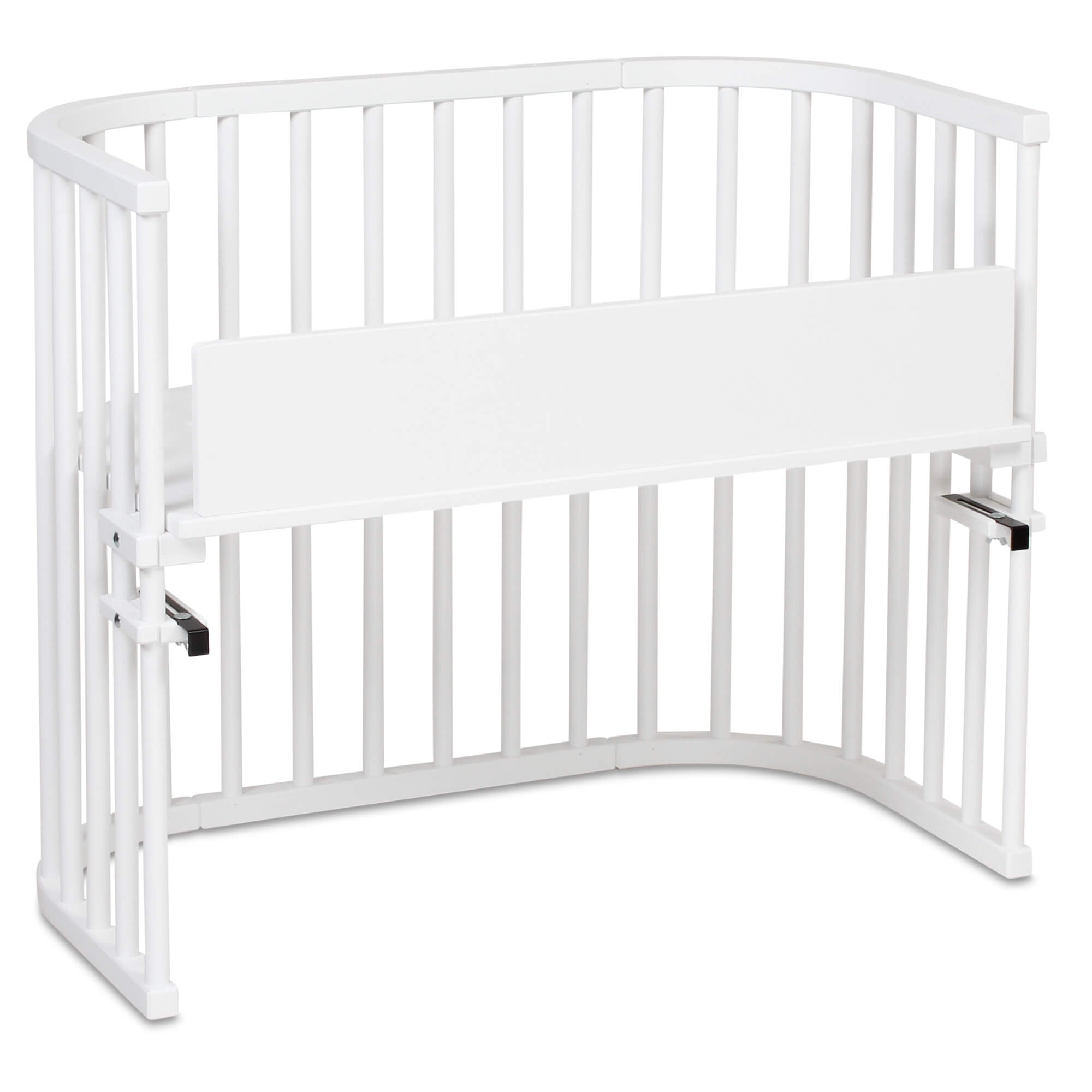
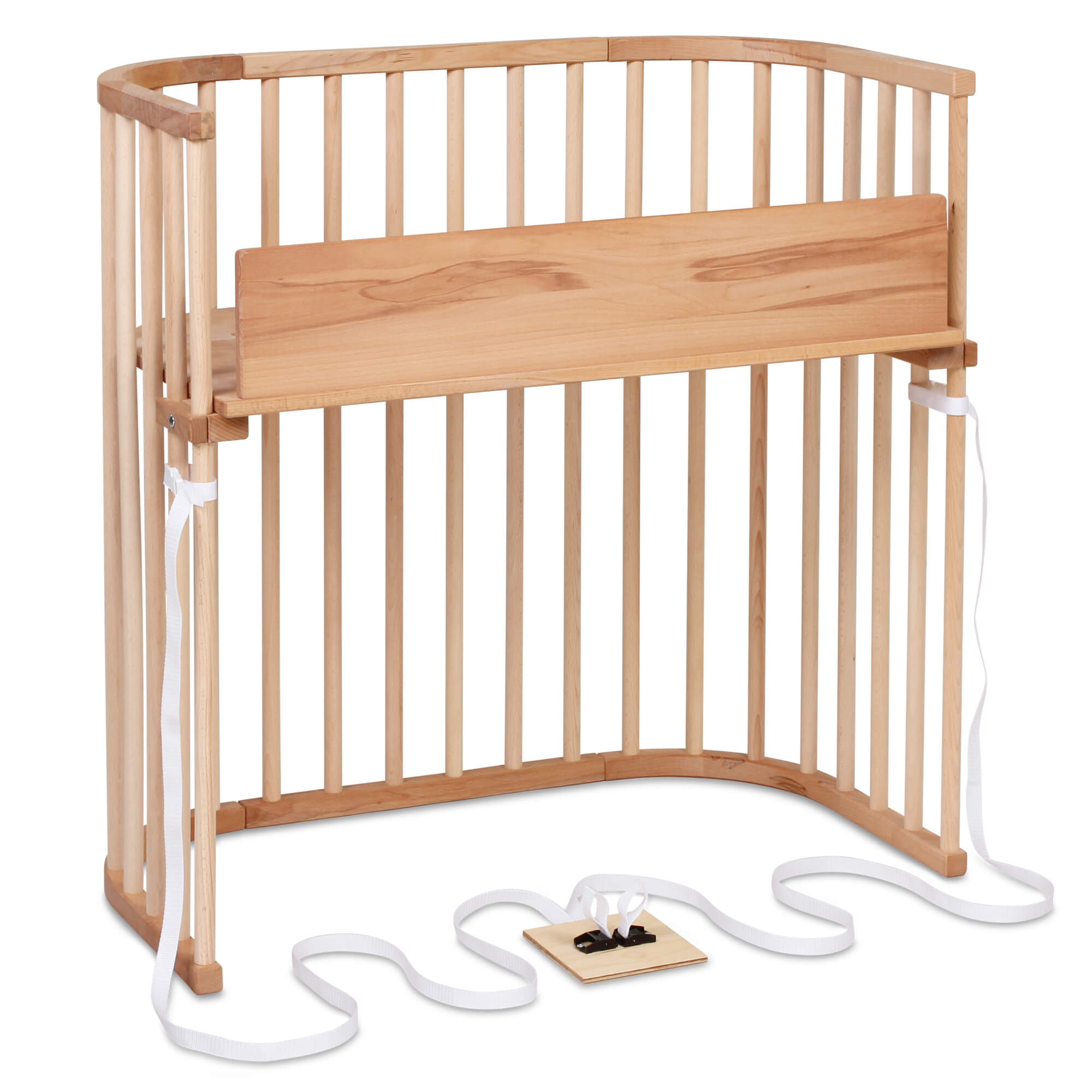
Wooden bedside sleepers. Solid-wood frames that attach level with your bed so you can reach the baby without standing up. These are built to the top of the window and, in babybay’s case, are designed to keep going afterwards in a different form.
- babybay Original
- $385. Fits beds with a mattress top up to 28 inches from the floor. Solid European beechwood.
- babybay Maxi
- Wider sleeping platform for one baby, for beds up to 28 inches.
- babybay Maxi Tall
- For tall boxspring and platform beds, adjusting up to 34.75 inches.
- Materials
- 100% ethically sourced European beechwood, water-based finishes, no plastic, no netting.
- Standards
- Meets ASTM and CPSC requirements; made in Germany.
- Warranty
- 10 years.
- After the bassinet stage
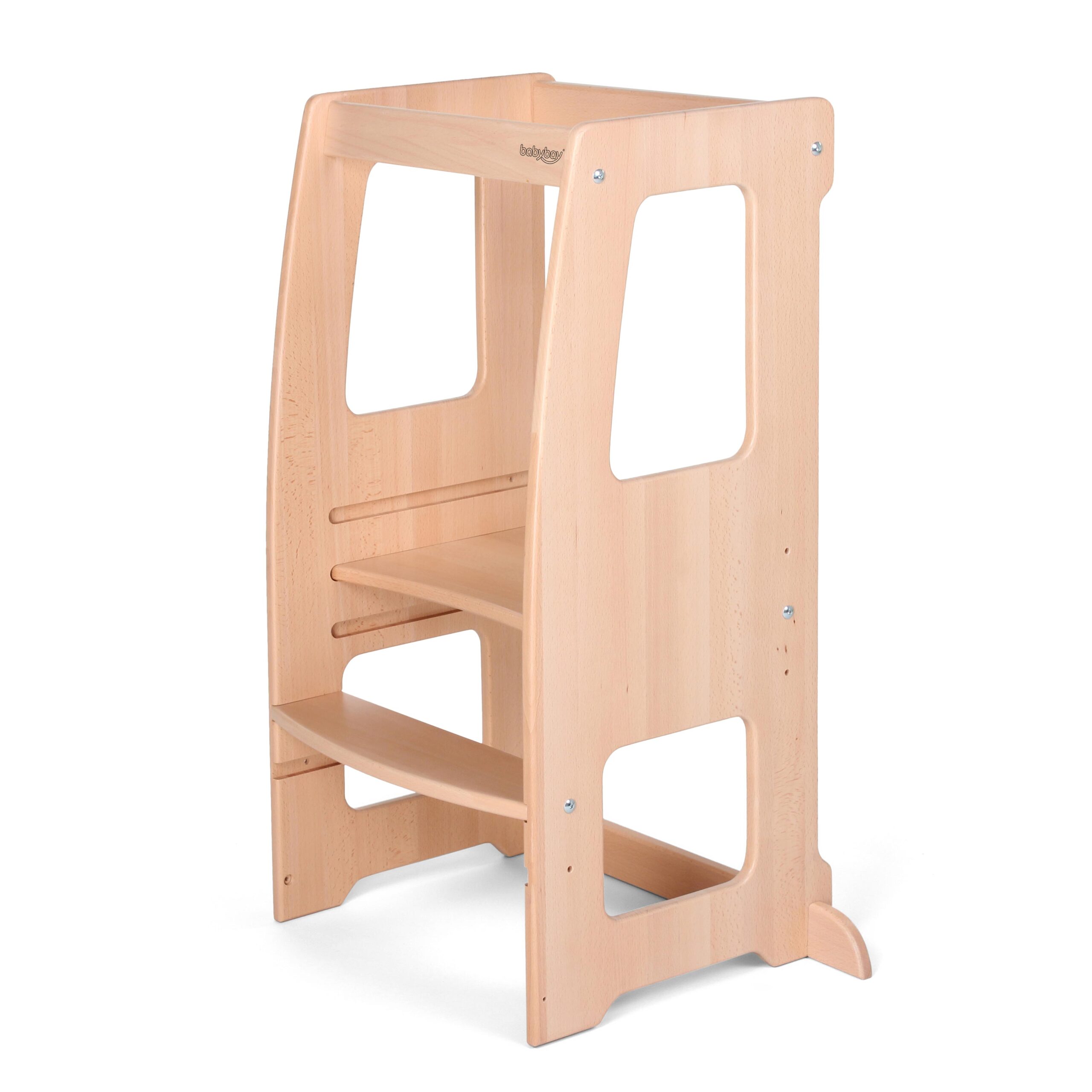
- Converts to a freestanding bassinet with the conversion kit; the frame goes on to further uses.
- Stated weight and age limits
- Published per model in the product manual and on the babybay FAQ — check the figure for your model.
The measurement that decides which model fits is not your baby’s weight at all — it is your bed. A bedside sleeper only works when its sleeping surface sits level with your mattress, so measure from the floor to the top of your mattress before buying anything in this category. Up to 28 inches, the babybay Original bedside sleeper fits. A tall boxspring or a platform frame with a thick mattress needs the Maxi Tall, which reaches 34.75 inches. If you want a wider sleeping platform for a bigger baby, the babybay Maxi gives you that on a bed up to 28 inches.
Getting that measurement wrong is the single most common reason a bedside sleeper is returned, and it has nothing to do with the baby.
Signs Your Baby Is Ready to Move
Run through this list every week or two from about three months. The first four are stop-tonight signals; the last four are get-ready signals.
01 · Stop tonight
Rolling from back to front, or front to back
Once it has happened once, deliberately, it will happen again in the night. This is the end of bassinet use, regardless of weight or age.
02 · Stop tonight
Pushing up onto hands and knees
The classic pre-crawling position. A baby who can do this can push against a side rail with real force.
03 · Stop tonight
Sitting up unassisted, or pulling on the side rail
Any attempt to use the structure of the bassinet to change position means the product is now being used in a way it was not tested for.
04 · Stop tonight
At or over the stated weight limit
A hard limit, not a soft one. Check the manual rather than estimating from the last weigh-in.
05 · Get ready
Head touching one end, feet at the other
Length is not itself a safety limit, but a baby who spans the platform is typically weeks away from the milestones that are.
06 · Get ready
Rolling to their side and staying there
The reliable early warning. Full rolling usually follows within a fortnight.
07 · Get ready
Waking more from bumping the sides
A baby who now has enough strength to shift across the surface in their sleep is telling you the same thing the milestone chart will say shortly.
08 · Get ready
Strong head and chest lift during tummy time
The motor control that makes rolling possible shows up during awake time first. Watching it develop is the cleanest way to see what is coming.
How Long Can a Baby Sleep in a Bedside Co-Sleeper Specifically?
The same three limits apply, with one extra consideration and one significant advantage.
The extra consideration is the open side. A bedside sleeper is designed to sit level with your mattress with one side removed or lowered so you can reach the baby. That arrangement is exactly right for an infant who cannot reposition themselves and is no longer right once they can, because the open side is the shortest route out. So the mobility rule matters slightly more urgently with a co-sleeper than with a fully enclosed bassinet, not less. If you have the sleeper set up open-sided and your baby is getting close to rolling, fit the fourth side back before the milestone rather than after.
The advantage is what happens next. babybay bedside sleepers are built to keep working after the bedside stage: the fourth side goes on, the bassinet conversion kit turns the frame into a freestanding bassinet, and the piece stays in the room rather than going into the loft at five months. That changes the arithmetic on what a bedside sleeper costs per month of use quite substantially, which is worth weighing against a cheaper product that ends at fifteen pounds.
The other thing worth saying plainly: bedside sleeping is not bed-sharing. The baby has their own firm, flat, separate sleeping surface at arm’s reach. That distinction is the whole point of the category and the reason it fits the guidance rather than working around it.
What to Do at Six Months: Convert, Then Crib
Outgrowing the bassinet does not mean moving your baby to another room. Those are two separate decisions, and the guidance treats them separately.
The AAP safe sleep guidance recommends that babies sleep in the parents’ room, on a separate sleep surface, for at least the first six months. So the first move is usually from a bedside sleeper to a crib or a converted freestanding bassinet still in your room — same room, different surface. The move to a nursery comes later and is a family decision rather than a safety one.
Doing it in that order also makes the change far easier on everyone, because only one variable moves at a time. A baby who has to learn a new sleeping surface and a new room in the same night frequently protests both. Our guide to how to transition from co-sleeping to a crib walks through the week-by-week version, and the short form is below.
STEP 01Two weeks before: watch for the signals
Run the readiness list weekly from three months. When you see side-rolling, chest lifts in tummy time, or feet braced against the end of the platform, start the clock.
Decide now what the next surface will be, and get it into the room while the bassinet is still in use.
STEP 02One week before: set the next surface up in your room
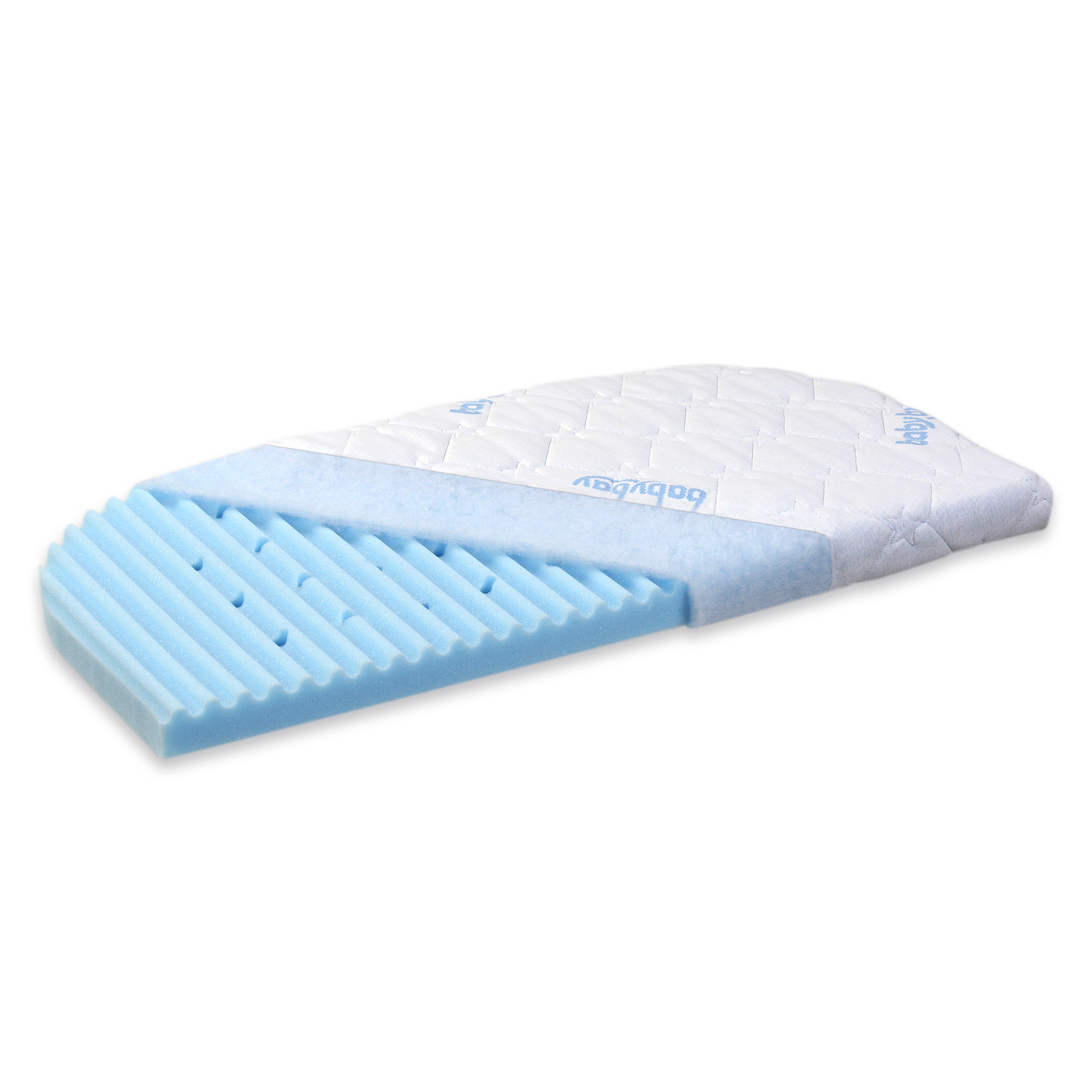
Crib or converted freestanding bassinet, positioned in your bedroom. Firm flat mattress, fitted sheet, nothing else in it — no pillow, blanket, bumper, positioner or toy.
STEP 03Start with daytime naps
Use the new surface for one or two naps a day for three to five days. Daytime sleep is the low-stakes place to learn a new surface, and most babies accept it faster than parents expect.
STEP 04Move nights, keeping everything else identical
Same room, same bedtime routine, same sleepwear, same sounds. Change one thing only. Fit the fourth side of the bedside sleeper or convert the frame before the first night rather than during it.
STEP 05Give it a fortnight before judging it
Two or three unsettled nights are ordinary and are not evidence the move was wrong. If you are still fighting it after two weeks, look at the room, the light and the timing rather than reversing the change.
STEP 06Move rooms later, as a separate step
Once the new surface is established and you have passed six months, a move to the nursery is one change rather than two. Many families wait considerably longer, and that is fine.
QCan a 6 month old still sleep in a bassinet?
Only if they are still under the product’s stated weight and age limits and cannot yet roll over or push up on hands and knees. Some calm, late-rolling babies do reach six or seven months in a bassinet safely. Most do not, because rolling typically arrives between four and six months and ends bassinet use on the day it happens.
QWhat is the weight limit for a bassinet?
It depends entirely on the product, which is why you should read the manual rather than a general figure. Lightweight folding and travel bassinets are frequently rated around 15 pounds. Sturdier stationary bassinets and solid-wood bedside sleepers are generally rated higher. Whatever the number, it is a hard limit rather than a target, and mobility usually ends bassinet use before the weight does.
QWhen should I move my baby out of the bedside bassinet?
As soon as any one of the three limits is reached: the stated weight, the stated age, or the ability to roll or push up on hands and knees. The move is to a crib or a converted freestanding bassinet, ideally still in your bedroom, since the AAP recommends room-sharing on a separate surface for at least the first six months.
QCan a baby sleep in a bassinet once they roll over?
No. Rolling is the point at which bassinet use ends, regardless of how much room is left or how far below the weight limit your baby is. Bassinet sides are lower than crib sides because they were designed for an infant who cannot reposition themselves, and a baby who can roll can reach a position against a side that they cannot reverse.
QHow long can a baby sleep in a bedside co-sleeper?
The same four-to-six month window, with the open side making the mobility rule slightly more urgent rather than less. If you are approaching the rolling milestone with the sleeper set up open to your bed, fit the fourth side back before the milestone arrives. A babybay then converts to a freestanding bassinet, so the frame carries on rather than ending at the same point.
QDoes a bigger bassinet buy more months?
A little, but less than most parents hope. A wider sleeping platform delays the day your baby feels cramped and may raise the weight at which the product is finished, so it can add a few weeks. It cannot delay rolling, and rolling is the limit that usually binds. Choose extra width for comfort and for a bigger baby, not as a way to extend the timeline.
QWhat is ASTM F2194 and why does it matter?
It is the consumer safety specification for bassinets and cradles, covering structural integrity, the stability of the sleeping surface, side height and the labelling that tells you the limits. The federal bassinet rule incorporates it and applies to products intended for infants up to approximately five months old. When a manual gives you an age or weight figure, that testing regime is where it comes from.
QDo we need a crib if we have a bedside sleeper?
Eventually, yes — every baby moves to a crib after the bassinet stage. The useful question is what happens in between. A babybay converts to a freestanding bassinet, which gives you a separate surface in your room for the months between outgrowing the bedside setup and moving to a nursery, and means the frame is not finished at five months.
Where better sleep is born
Measure your bed, then pick the model that fits
Floor to the top of your mattress decides everything: up to 28 inches takes the Original, up to 34.75 inches needs the Maxi Tall, and the Maxi gives one baby a wider platform. Solid European beechwood, ASTM and CPSC compliant, made in Germany, 10-year warranty.