
Shop


Summarize this post with:


Baby Sleep Safety
Holding your newborn on your chest while you are awake is safe and good for both of you. Falling asleep with your baby there is not. If you feel your eyes closing, move your baby onto their back on a separate flat, firm surface close to you.
Last reviewed
Here is the short answer. A contact nap is fine while you are fully awake and alert. The danger starts the moment you drift off, because a sleeping adult cannot notice if the baby slips, turns face down, or gets wedged against your body or the furniture.
That is the line drawn by the American Academy of Pediatrics 2022 safe sleep policy. It does not tell you to stop cuddling your baby. It tells you where your baby should be when nobody is watching: on their back, alone, on a flat, firm surface in your room.
This guide explains why chest sleeping feels so natural, what actually goes wrong when a tired parent dozes off, and how to keep your baby close at night without sharing the same surface.
Key Takeaways
- 01
Awake is fine — Holding your newborn on your chest is safe and good for you both while you stay alert.
- 02
Asleep is the risk — Falling asleep with a baby on your chest, especially on a sofa or armchair, is one of the most dangerous sleep setups.
- 03
Back, alone, flat and bare — For every sleep, your baby goes on their back on their own firm, flat surface with nothing else in it.
- 04
Close the distance — A bedside sleeper keeps your baby inches away, which makes the safe choice the easy one at 3 a.m.
Why Your Newborn Sleeps Best on Your Chest
If your baby only settles on you, nothing is wrong with your baby. For nine months they lived with your heartbeat, your voice and constant warmth. Your chest gives them all three again.
Being held upright also helps with wind after a feed. Many newborns fuss when laid flat right after eating and calm down once they are held against a parent. Skin contact can steady a baby’s breathing, heart rate and temperature, which is why hospitals encourage it in the first hours after birth.
There is a parent side too. After a long night of feeds, a warm baby on your chest is soothing, and your body wants to rest. That is exactly why the risk is real. The more comfortable the moment, the easier it is to fall asleep without meaning to.
Is It Safe to Sleep With a Newborn on Your Chest?
No. Being awake with your baby on your chest is safe. Sleeping with your baby on your chest is not, and the American Academy of Pediatrics (AAP) does not recommend it.
A baby lying on your chest is lying on their tummy. Tummy sleeping is a known risk factor for sudden infant death syndrome (SIDS), because a baby face down can rebreathe the air they just breathed out. Your chest is also soft and moves with every breath. It is not the flat, firm, level surface the AAP asks for.
The biggest danger comes when you fall asleep sitting up on a sofa, armchair or recliner. As you relax, your arms loosen and your body slumps. A newborn can slide into the gap between you and a cushion, or end up with their face pressed into your body or the fabric. Babies this young cannot lift their heads or push away to free their nose and mouth.
The most dangerous place to doze off with a baby
The AAP calls couches and armchairs extremely dangerous places to fall asleep with an infant. If you are feeding on the sofa and feel sleepy, stand up, put your baby down on their back in their own sleep space, and then rest.
The Real Risks When You Doze Off
About 3,500 babies die in the United States each year from sleep-related causes, according to the AAP. Most of these deaths happen in unsafe sleep settings, not in a bare crib or bassinet. The table below shows what goes wrong in the setups tired parents most often end up in, and the swap that removes the risk.
Common chest-sleep situations and safer swaps
| Situation | What can go wrong | Safer swap |
|---|---|---|
| Dozing on the sofa with baby on your chest | Baby slides into a gap between you and the cushions, or ends up face down in fabric | Put baby on their back in their own sleep space before you rest |
| Falling asleep in a recliner or armchair | Your arms relax, baby slumps or rolls, and nothing stops the fall | Feed in the chair only while alert, then transfer baby |
| Contact nap while you scroll your phone in bed | You drift off, pillows and duvet end up near baby’s face | Set a timer, sit upright, keep bedding clear of baby |
| Skin-to-skin right after birth while you are exhausted | A newborn can end up with nose and mouth blocked against your skin | Ask a partner or nurse to watch, or place baby in the bassinet |
| Night feed in bed when you might fall asleep | Soft bedding and pillows near baby’s head | Clear pillows and covers away first, and move baby back after the feed |
Some things raise the risk even more. These include a baby born early or small, a parent who smokes, a parent who has had alcohol, and any medicine that makes you drowsy. If any of these apply, the advice is simple. Do not let yourself fall asleep holding your baby at all.
Awake Contact Naps vs. Asleep Together: Where the Line Is
Enjoy it. Sit upright, with your baby’s face turned to the side so their nose and mouth are clear. Keep one hand on their back. Check that their chin is not tucked down onto their chest, since that can narrow the airway.
Choose a spot where you will stay alert, such as a firm chair with good light, not a deep sofa with the TV low and the room dark.
This is the moment to act. Your eyelids getting heavy is the signal to put your baby down, even if they fuss for a minute.
Lay your baby on their back in their own sleep space, then lie down yourself. If someone else is home, hand the baby over. A short cry while you settle them is far safer than a deep nap with your baby on your chest.
It happens to many parents, and guilt does not help. Check your baby, move them onto their back in their own sleep space, and then look at what led to it.
Was it the sofa after a 3 a.m. feed? Then plan that feed somewhere else, with the sleep space within arm’s reach. Small changes to the setup prevent most repeats.
Skin-to-Skin in the First Hours and Days
Skin-to-skin contact right after birth is encouraged, and for good reason. It helps babies stay warm, helps them start breastfeeding, and helps parents bond. The safe way to do it is with an awake adult watching.
Doctors describe a rare event called sudden unexpected postnatal collapse (SUPC), in which a healthy-looking newborn stops breathing well in the first days of life. It is linked in part to a baby lying face down on a parent who is drowsy or busy with a phone. In the hospital, ask a partner or nurse to keep watch if you feel tired. At home, the same rule applies. Skin-to-skin is a waking activity.
What to Do When You Might Fall Asleep Feeding
Night feeds are where most accidental chest sleeping happens. The AAP is practical about this. If you think you might fall asleep while feeding, it is less dangerous to do so in an adult bed than on a sofa or armchair.
In that case, move pillows, sheets and blankets away from your baby before you start. As soon as you wake up, put your baby back on their back in their own sleep space. This is a backup plan for a tired parent, not a recommendation to share a bed.
The easier fix is to arrange the room so the safe sleep space is right next to you. When the transfer is a short slide rather than a walk across the room, you are far more likely to do it. If you are still deciding how close is close enough, our look at the Safe Sleep Seven, explained honestly covers what bed-sharing advocates say and where a bedside sleeper fits.
Safer Alternatives That Keep Your Baby Close
Step 1Room-share on a separate surface
The AAP recommends your baby sleep in your room, but not in your bed, ideally for at least the first six months. You can hear every stir, and your baby sleeps on their own flat, firm surface.
Step 2Use a bedside sleeper at mattress height
A bedside sleeper sits flush against your bed, so your baby is inches from you with no walls between you. You can reach over for a feed and slide them back without getting up.
Step 3Keep the sleep space bare
A fitted sheet and nothing else. No pillows, bumpers, loose blankets, nests or toys. Dress your baby for the room temperature instead of adding covers.
Step 4Take contact naps on purpose, while awake
Plan one or two daytime contact naps when you are rested. Sit upright and keep your phone away so you stay present.
Step 5Share the night
If there are two adults, split the night into shifts. One person sleeps fully while the other handles feeds, then you swap.
Step 6Use a carrier while you are up and moving
A well-fitted carrier keeps your baby upright on your chest while you walk around. Keep their face visible and their chin off their chest.
The Consumer Product Safety Commission safe sleep guidance sums up the rule for the sleep space itself: bare is best. Your baby should sleep on their back, alone, on a firm flat mattress made for infants. Products that promise to make shared sleep safer, such as nests and loungers, do not meet that standard. If you have been given one, read our guide to whether a co-sleeper pillow is safe before using it.
Clothing is part of this too. Since loose blankets are off the table, a sleepsuit or wearable blanket does the job. Our chart of what a newborn should wear to sleep matches outfits to room temperature.
How a bedside sleeper changes the night
The reason many parents end up with a baby asleep on their chest is distance. The bassinet is across the room, the baby has just fallen asleep after a feed, and getting up feels impossible.
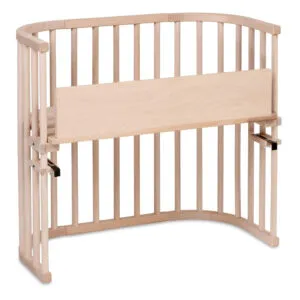
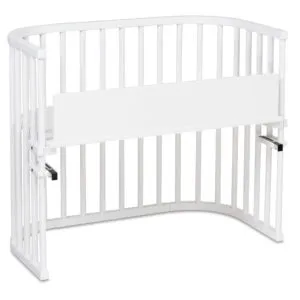
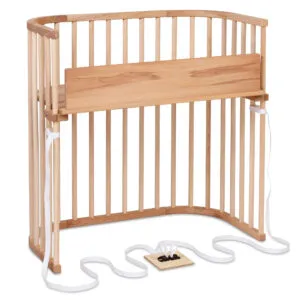
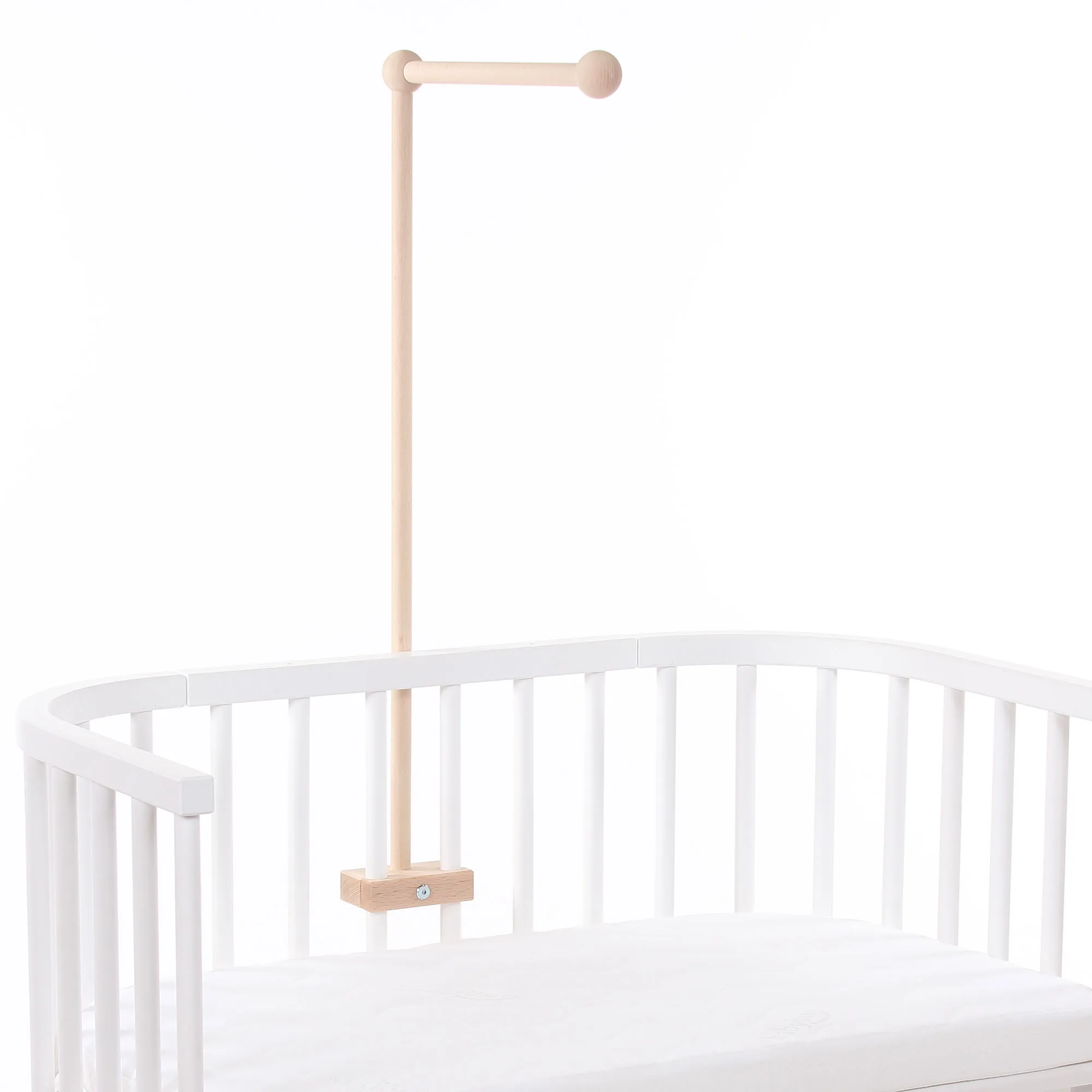
A babybay Original bedside sleeper closes that gap. It attaches to the side of your bed so its mattress sits level with yours, with no plastic and no netting between you and your baby. Your baby sleeps on their own firm, flat surface, yet you can lay a hand on them or reach over for a feed without standing up.
It is made of solid European beechwood, meets the US bedside sleeper safety standards of the Consumer Product Safety Commission and the American Society for Testing and Materials (ASTM), and carries a 10-year warranty. The Original fits beds up to 28 inches high. For a taller boxspring bed, the babybay Maxi Tall for boxspring beds fits mattresses up to 34.75 inches. With a conversion kit, it can later stand on its own as a freestanding bassinet.
How to Move a Chest-Sleeping Baby to Their Own Space
If your baby has learned to fall asleep only on you, change it in small steps. Our full guide on how to get your newborn to sleep in the bassinet goes step by step, but these are the basics:
Transfer checklist
- Wait until your baby is in deep sleep: loose arms, slow breathing, no eye flutter.
- Warm the sheet with your hand for a moment before laying your baby down.
- Lower your baby feet first, then bottom, then head, keeping a hand on their chest for a moment.
- Lay your baby on their back with the face clear and nothing else in the sleep space.
- Keep the room dim and quiet, and use steady white noise if it helps.
- If they wake, soothe them in place with a hand and a gentle shush before picking them up.
Weeks 0-2
Lots of holding, all of it awake
Newborns feed often and sleep in short stretches. Hold freely during the day while alert, and put your baby down on their back for every sleep when you need rest.
Weeks 2-6
Practice the transfer
Try one transfer a day at the time your baby sleeps most deeply, often the first stretch of the night. Expect some wake-ups.
Weeks 6-12
Build a short routine
A feed, a clean diaper, a sleepsuit and a dim room. The same steps each night tell your baby that sleep in their own space comes next.
3-6 months
Longer stretches on their own
Many babies now sleep longer at night. Keep room-sharing on a separate surface, as the AAP advises for at least the first six months.
If your baby sleeps all day and wakes all night, that often makes the transfer harder. Our guide to newborn day/night confusion explains how light, feeds and daytime routines turn that around.
When to Talk to Your Pediatrician
Some babies only settle upright because something bothers them when lying flat. Call your pediatrician if your baby arches and screams after most feeds, vomits often, struggles to gain weight, or breathes noisily or with pauses while asleep.
Speak up about your own sleep too. If exhaustion means you are falling asleep holding your baby despite your best plans, that is a sign you need more help at night. Your doctor can also help if you feel low, anxious or unable to rest even when the baby sleeps.
QCan my newborn nap on my chest if I stay awake?
Yes. A contact nap is safe while you are fully awake and alert. Sit upright, keep your baby’s face turned to the side with their nose and mouth clear, and put them down on their back in their own sleep space if you start to feel drowsy.
QWhy is it dangerous to fall asleep with a baby on your chest?
When you fall asleep, your arms relax and you cannot notice if your baby slides, turns face down or gets wedged against you or a cushion. Newborns cannot lift their heads to free their nose and mouth, so a blocked airway can go unnoticed.
QIs it safer to fall asleep with my baby in bed than on the couch?
Yes, but neither is the plan. The AAP says falling asleep with a baby on a sofa or armchair is the most dangerous option. If you might doze off while feeding, an adult bed cleared of pillows and blankets is less dangerous. Move your baby back to their own space as soon as you wake.
QIs skin-to-skin contact the same as chest sleeping?
No. Skin-to-skin is a waking activity with an alert adult watching. It helps with warmth, feeding and bonding. The risk comes when the adult falls asleep or stops paying attention while the baby lies face down.
QHow can I keep my baby close at night without bed-sharing?
Room-share with your baby on a separate surface next to your bed. A bedside sleeper that sits level with your mattress keeps your baby within reach for feeds while they sleep on their own firm, flat, bare surface.
QMy baby only sleeps on me. What should I do?
Hold your baby while you are awake, and practice short transfers once they are in deep sleep. Warm the sheet first, lower them feet first, and settle them with a hand on their chest. Most babies adjust over a few weeks.
QCan I use a nest or lounger on my chest or in my bed to make it safer?
No. Nests, loungers and pillows are not safe sleep surfaces, and federal guidance says the sleep space should be bare. Use them only for supervised awake time, if at all.
Keep your baby close, safely
Find the babybay that fits your bed
Compare our bedside sleepers and co-sleeping bassinets and pick the model that matches your mattress height. Every babybay is solid European beechwood with a 10-year warranty.