
Shop

Summarize this post with:


Newborn Sleep · Temperature
Dress your newborn in one more layer than you are comfortable in, keep the room around 68 to 72°F, and put nothing loose in the sleep space. That is the whole rule. The table below turns it into an actual number of layers for your actual room.
If you read nothing else
- 01
One more layer than an adult is comfortable in, at a room temperature of roughly 68–72°F.
- 02
Match the TOG rating of the sleep sack to the room, not to the season on the packaging.
- 03
Check the chest or the back of the neck. Cold hands and feet are normal and tell you nothing.
- 04
Nothing loose goes in the sleep space — no blankets, no hats indoors, no bumpers, no positioners.
- 05
A sleeper attached to the side of your bed sits in warmer air than a bassinet across the room. Dress for the sleeper’s microclimate.
The One-Line Rule
Dress your baby in one more layer than you would be comfortable sleeping in, keep the room between about 68 and 72°F, and keep the sleep surface completely clear. Everything else on this page is that sentence with the details filled in.
It works because it uses the one thermometer you always have with you. If you are comfortable under a sheet in a t-shirt, your baby is comfortable in a onesie and a light sleep sack. If you need a duvet and socks, your baby needs a warmer sack. You do not have to recalculate anything when the weather turns — you just notice what you are wearing.
Why the fixation on temperature
Overheating is one of the modifiable risks, which is why it gets this much attention
The AAP’s 2022 safe sleep recommendations list avoiding overheating and head covering alongside supine sleep, a firm flat surface free of soft bedding, and room-sharing without bed-sharing. Dressing for the room is not fussiness — it is one of the few things in infant sleep that is genuinely within your control.
The Room-Temperature Chart
Most guidance splits this across three pages: a piece on room temperature, a piece on TOG, a seasonal piece on summer. Here it is as one table. Read across from the temperature your thermometer actually shows.
Room temperature to layers and TOG
Compiled from standard TOG guidance
| Room temperature | Base layer | Over layer | TOG |
|---|---|---|---|
| Above 75°F | Short-sleeve bodysuit, or just a diaper above 78°F | Light muslin swaddle or nothing | 0.2–0.5 |
| 72–75°F | Short-sleeve bodysuit | Sleep sack | 0.5 |
| 69–72°F | Long-sleeve bodysuit | Sleep sack | 1.0 |
| 64–68°F | Long-sleeve bodysuit or footed pyjamas | Sleep sack | 2.0–2.5 |
| 61–64°F | Footed pyjamas over a long-sleeve bodysuit | Sleep sack | 2.5–3.5 |
| Below 61°F | Footed pyjamas over a long-sleeve bodysuit | Sleep sack — and warm the room if you can | 3.5 |
Definition
TOG — Thermal Overall Grade — a measure of how much insulation a fabric provides. Higher means warmer. A 0.5 TOG sack is a single layer of light cotton; a 3.5 TOG sack is a quilted winter weight. It describes the sack alone, which is why the base layer underneath still has to be chosen separately.
Two cautions about reading a TOG label. First, the season printed on the packaging is marketing, not measurement — a “summer” sack in a Minnesota basement bedroom in July may be wrong, and a “winter” sack in a Florida apartment almost certainly is. Go by the number and the thermometer. Second, TOG describes only the sack. A 1.0 TOG sack over footed pyjamas is meaningfully warmer than the same sack over a short-sleeve bodysuit.
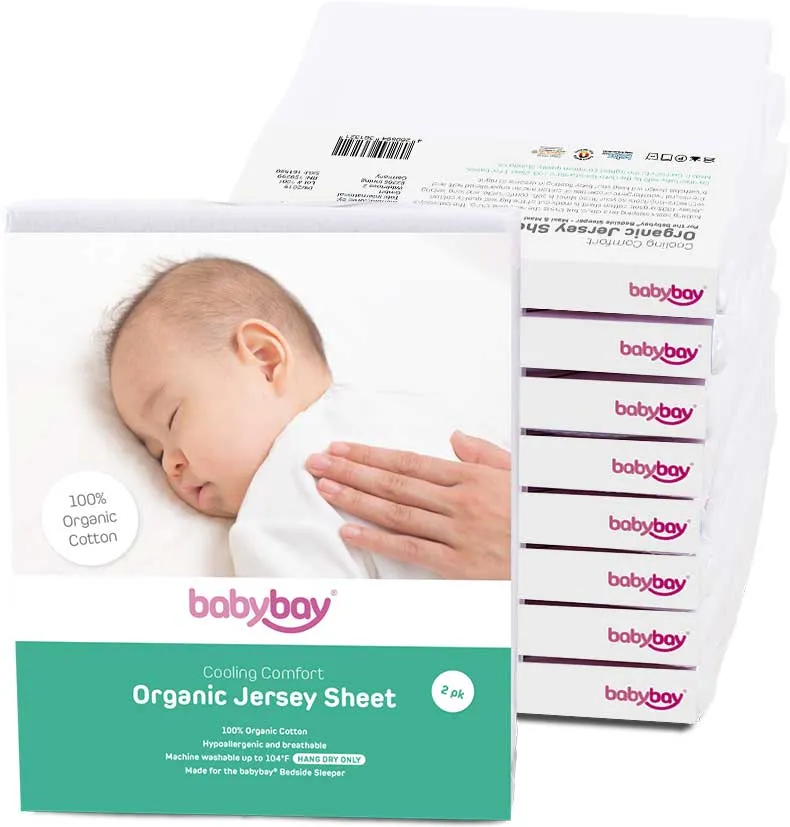
Fabric matters at the margins too. A single-layer cotton jersey breathes and moves moisture away from the skin in a way that a synthetic of the same nominal TOG does not, which is one reason our organic jersey sheets are jersey rather than a poly blend, and why the accessories carry OEKO-TEX certified fabrics testing for what is actually in contact with a newborn’s skin for fourteen hours a day.
Why a Bedside Sleeper Runs Warmer
Here is the detail nobody writing about newborn sleepwear mentions, because most of them are writing about a bassinet standing alone in the middle of a room. Keeping night clothes simple and lights low also helps a baby who mixes up day and night, which we explain in our guide to newborn day-night confusion.
A sidecar-style sleeper is attached to the side of an adult bed, with one side open to it. Two adults under a duvet generate a surprising amount of heat, and that warm air does not stay politely on your side of the mattress. The pocket of air inside a bedside sleeper is consistently a little warmer than the air at the thermostat on the far wall — not dramatically, but enough to move you one row up the chart.
The practical version: if your room reads 70°F and the sleeper is attached to your bed, dress for the 72–75°F row rather than the 69–72°F row for the first few nights, then check the chest and adjust. Parents who use bedside co-sleeper bassinets often find they run one TOG lighter than the chart suggests, all year round. Twitches and grunts in the night are often normal, and our guide to active sleep in babies explains what those movements mean. Once you have the layers sorted, our 3 week old sleep schedule shows how those outfits fit around the night feeds.
This is not an argument against a bedside sleeper — room-sharing on a separate surface is precisely what the safe-sleep guidance asks for, and having the baby within arm’s reach is the point. It is an argument for checking the baby rather than the thermostat.
How to Check, in the Dark, Without Waking Them
01Slide two fingers to the chest or the back of the neck
These are the places that tell you the truth about core temperature. Warm and dry is right. Damp, clammy, or hot to the touch means one layer too many.
The back of the neck under the hairline is the easiest to reach without disturbing a sleeping baby.
02Ignore the hands and feet entirely
Newborns have immature circulation and their extremities run cool as a matter of course. Cold hands are not a sign your baby is cold, and adding a layer because of them is the single most common route to overdressing.
03Look for the other signals
Flushed cheeks, damp hair at the back of the head, rapid breathing or unusual restlessness all point to too warm. A baby who is too cold is usually simply unsettled and hard to resettle.
04Adjust one layer at a time
Change the base layer or the sack, not both. Then wait a night. Changing two variables at once leaves you knowing only that something worked.
Swaddle, Sleep Sack or Pyjamas
Swaddle
- ✓Dampens the startle reflex in the early weeks
- ◦Adds warmth — count it as roughly one extra layer
- ✗Must stop at the first sign of rolling, without exception
- ✗Easy to wrap too tightly around the hips
Sleep sack
- ✓Rated in TOG, so the warmth is a known quantity
- ✓Safe to continue well past the rolling stage
- ✓Stays put — cannot be kicked off like a blanket
- ◦Arms are out, so the base layer has to cover them in a cool room
The transition point is not an age, it is a milestone. The moment your baby shows any sign of rolling — even an unsuccessful attempt, even once — swaddling stops. A swaddled baby who rolls to their front cannot push up or turn their head freely, and that is the risk the whole rule exists to prevent. Most babies reach this between eight and twelve weeks, and some considerably earlier.
When you make that switch, remember the swaddle was contributing warmth. A baby who was comfortable in a bodysuit plus a swaddle will usually need a bodysuit plus a 1.0 TOG sack in the same room, not a bodysuit alone.
What Never Goes in the Bassinet
The sleep surface should hold the baby, a fitted sheet, and nothing else. That is not a stylistic preference — the federal safety standard for bassinets exists precisely because a firm, flat, uncluttered surface is what a newborn sleep space has to be.
01 · Never
Loose blankets
A blanket can be pulled over the face and cannot be kicked off in a controlled way. A correctly sized sleep sack does the same job and stays where it is put. This is the substitution that makes everything else easy.
02 · Never
Hats indoors
Babies release a large share of their heat through the head. A hat indoors both traps that heat and can slip down over the face. Hats are for outside.
03 · Never
Bumpers, pads and pillows
Padded bumpers, wedges, head-shaping pillows and anything described as a positioner do not belong in a sleep space. The sides of a compliant sleeper are already designed to be safe.
04 · Never
Anything that changes the angle
The surface stays firm and flat. Inclined sleep surfaces and add-on supports change the position of a newborn’s airway and have no place in a bassinet.
Summer Heatwaves and Cold Rooms
Most seasonal advice covers one end of the range and leaves you guessing at the other. Both ends are worth having.
In genuine heat — above about 78°F, and particularly in a home without air conditioning — a diaper and a single light layer is appropriate, and above roughly 80°F a diaper alone is reasonable. Strip back the layers rather than reaching for a fan pointed at the baby; move air through the room instead, keep blinds closed during the day, and offer more frequent feeds, since babies lose fluid faster than adults in heat. A 0.2 TOG muslin sack is worth owning purely for these weeks.
At the cold end, warm the room rather than piling on layers. Heating a bedroom into the mid-60s is safer and more comfortable than stacking a third layer on a newborn, because layers are hard to adjust at 3am and a thermostat is not. If you cannot warm the room, a 3.5 TOG sack over footed pyjamas is the top of the sensible range — past that you are working against the guidance rather than with it.
One thing that changes at both ends: check more often. A stable 70°F room needs one check when you go to bed. A room that is 76°F at 9pm and 68°F by 4am needs a second look, and that is most rooms in spring and autumn.
If you are still working out the sleep setup itself rather than what goes in it, the surrounding decisions are covered elsewhere on this site: the Safe Sleep Seven explains where bedside sleeping sits against bed-sharing, bassinet versus crib deals with whether you need both, and how long a baby uses a bassinet covers the weight and mobility limits that eventually end this stage.
Where better sleep is born
A sleeper that puts your baby within arm's reach
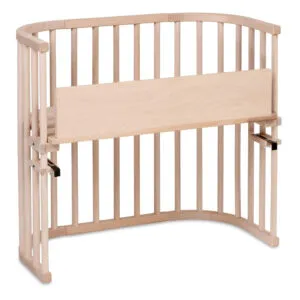
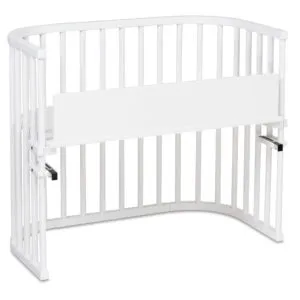
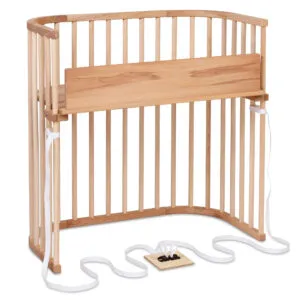
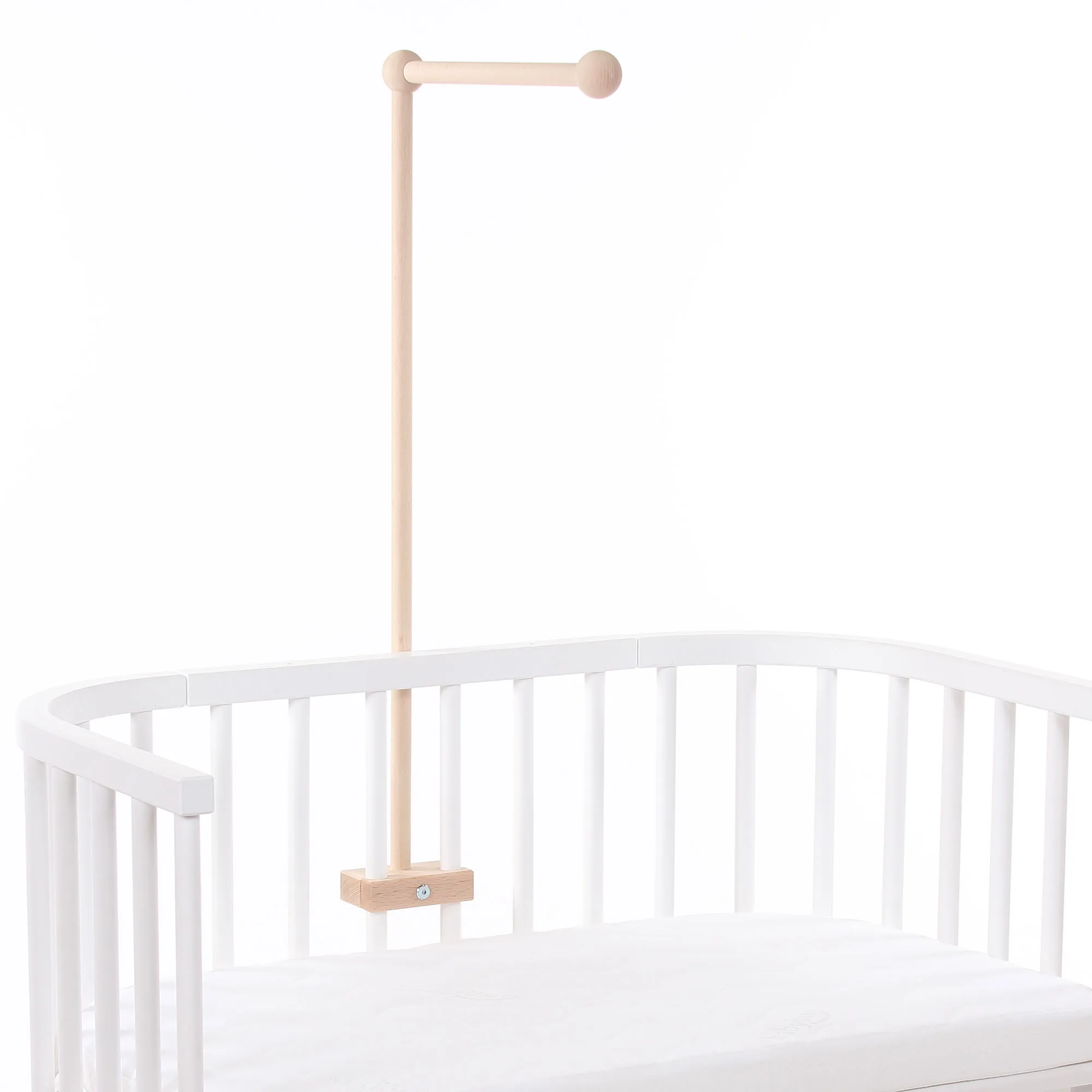
The babybay bedside sleeper attaches to your bed so your newborn sleeps on their own firm, flat surface while staying close enough to settle without getting up. Solid European beechwood, water-based finishes, ten-year warranty.
Last updated
QWhat should a newborn wear to sleep?
One more layer than you would be comfortable sleeping in, with the room at roughly 68 to 72°F. In practice that is usually a long-sleeve bodysuit under a 1.0 TOG sleep sack. In a warmer room, a short-sleeve bodysuit under a 0.5 TOG sack. In a cool room, footed pyjamas under a 2.5 TOG sack. Nothing loose goes in the sleep space alongside them.
QWhat room temperature is safe for a newborn at night?
Around 68 to 72°F is the usual guidance and it is a comfort range rather than a hard boundary — what matters is dressing for whatever the room actually is. If your room sits outside that range and you cannot change it, adjust the layers using the chart above and check the baby’s chest more often than you otherwise would.
QHow do I tell if my baby is too hot or too cold?
Slide two fingers onto the chest or the back of the neck. Warm and dry is right; damp, clammy or hot means one layer too many. Flushed cheeks, damp hair at the back of the head and rapid breathing all point to overheating. A baby who is genuinely too cold is usually just unsettled and hard to resettle.
QAre cold hands a sign my baby is cold?
No. Newborn circulation is immature and hands and feet run cool as a matter of course, even when the baby is perfectly warm. Adding a layer because of cold hands is the most common way babies end up overdressed. Judge by the chest or the back of the neck instead.
QCan a newborn sleep with a blanket in a bassinet?
No. The sleep surface should hold the baby and a fitted sheet and nothing else. A blanket can be pulled over the face and cannot be kicked off in a controlled way. A correctly sized sleep sack provides the same warmth in a known TOG rating and stays where it is put, which is why it is the standard substitution.
QWhat TOG sleep sack do I need for my room?
Measure the room at the time your baby actually sleeps in it, not in the afternoon. Above 75°F use 0.2 to 0.5 TOG; 72 to 75°F use 0.5; 69 to 72°F use 1.0; 64 to 68°F use 2.0 to 2.5; below 64°F use 2.5 to 3.5 with a warmer base layer. Ignore the season printed on the packaging — it describes a climate, not your bedroom.