
Shop

Summarize this post with:


Bassinet fit and care
The trouble
Leaks, spit-up and diaper blowouts soak into a bassinet mattress pad, and most pads cannot go in the washing machine whole.
What actually works
A thin, snug, breathable protector under the fitted sheet keeps the pad clean without changing how firm or flat the sleep surface is.
Yes, most parents need one. Choose a protector cut for your exact bassinet, fit it under the fitted sheet, and keep a spare for night changes.
A bassinet mattress protector is a thin waterproof layer that sits between the mattress pad and the fitted sheet. It is worth buying if your pad is not fully washable, which describes most foam and natural-fiber pads. The right one is thin, fits snugly with no bunching, and lets air move. The wrong one is loose, thick or slippery, and that matters far more than any stain.
How to use this guideShort on time? Read the quick answer and the buying checklist.Setting up a babybay? Jump to the section on Dry Comfort protectors.Planning laundry? The section on how many you need has the math.
Key Takeaways
- 01
Most parents need one — Use a protector unless your whole pad is easy to wash and dry quickly.
- 02
Under the sheet, never over it — The fitted sheet is the only layer your baby should touch.
- 03
Thin, snug and breathable — A bulky or loose protector can soften the surface or open a gap at the sides.
- 04
Buy two or three — One on, one in the wash, and a spare for the night when everything leaks at once.
- 05
Match the model — babybay owners can buy a Dry Comfort protector cut for the Original or for the Maxi and Maxi Tall.
Do You Need a Bassinet Mattress Protector? The Quick Answer
For most families the answer is yes. Newborns leak from both ends, often at night, and a soaked mattress pad is hard to clean. Foam cores and natural fillings can hold moisture for days, and some cannot be washed at all. A protector catches the mess so you strip one thin layer instead of airing out the whole pad.
The one exception is a pad you can fully wash and dry quickly. Even then, many parents still add a protector, because pulling off a protector at 3 a.m. is faster than removing and washing a pad cover. It also means the bassinet is ready again in a minute rather than a day.
What a protector must never do is change the sleep surface. The American Academy of Pediatrics (AAP) asks parents to use a firm, flat, level surface with only a fitted sheet. Its 2022 safe sleep recommendations from the AAP say the space should hold nothing else, so the protector has to behave like part of the mattress, not like extra bedding.
Definition
Bassinet mattress protector — A thin, fitted, waterproof layer made for one bassinet size. It goes on the mattress pad, under the fitted sheet, and protects the pad from liquids.
Waterproof vs. Breathable: Why You Need Both, Not One
Waterproof and breathable sound like opposites, but a good protector manages both. Most use a very thin film bonded to a soft fabric. A common choice is thermoplastic polyurethane (TPU), a soft, stretchy film. The film blocks liquid drops, yet it lets water vapor from warm skin pass through slowly.
Cheap protectors often use a plain plastic or vinyl sheet instead. These stop leaks well, but they also stop air. Heat and sweat then build up between the baby and the plastic, and the sheet on top can feel damp and clammy. The mattress pad underneath can also trap moisture, which is how mildew starts.
So look for both words on the label, and treat breathable as the one you cannot skip. A bassinet protector does not need to hold back a flood. It needs to stop a leak long enough for you to change the sheet.
Two kinds of protector, side by side
Breathable waterproof protector
- Thin bonded film, often TPU, under a soft cotton or jersey face
- Blocks liquid while letting body heat and vapor escape
- Lies flat and quiet, with no crinkle when the baby moves
- Machine washable and quick to dry on low heat
Plain plastic or vinyl sheet
- Thick, smooth plastic with no fabric layer
- Stops liquid but also traps heat and sweat
- Can slide, crinkle and lift at the corners
- Can crack with hot washes and dryer heat
Can a Mattress Protector Make a Bassinet Unsafe?
It can, if it is the wrong one. Three problems cause the risk: a protector that is too thick, one that is too big, and one used on top of the fitted sheet. Each one changes the surface the baby lies on, which is exactly what safe sleep advice tries to prevent.
Gaps are the biggest worry. The U.S. Consumer Product Safety Commission (CPSC) explains that babies can suffocate in gaps between an undersized mattress, or extra padding, and the side walls. Its CPSC recall notice on ill-fitting mattresses describes that hazard. A bulky quilted protector can push the pad up or squeeze it away from the frame, and that can open a gap along one side.
Thickness also changes firmness. A thick quilted topper makes a firm pad soft on top, and soft surfaces are what the AAP warns against. Keep the protector thin enough that, when you press the center with your hand, it springs back flat right away.
Where the protector goes
Wrong setup
- Fitted sheet on the pad
- Protector laid loose on top of the sheet
- Baby lies on a slippery, less breathable layer
Right setup
- Protector fitted snugly on the pad
- Fitted sheet pulled over both
- Baby lies on soft cotton, and the protector stays out of reach
What to Check Before You Buy
Bassinets have no standard mattress size, so the first check is always the measurement. A protector sold as universal may be several inches too long or too wide for your bassinet. The bassinet mattress and sheet size chart walks through why sizes vary and how to measure yours. After size, work through the points below in order.
Step 1Made for your bassinet model
Choose a protector cut to your exact pad, not a size range. It should cover the top and wrap the edges without spare fabric.
Step 2Snug fit with no bunching
An elastic band or fitted corners should hold it flat. Once fitted, run your hand along every edge. You should feel no folds, lumps or loose corners.
Step 3Thin enough to keep the pad firm
Skip quilted toppers and padded liners. The protector should add almost no height, so the pad still seats fully in the frame.
Step 4Breathable waterproof layer
Look for a bonded film such as TPU under a fabric face. Avoid plain vinyl or plastic sheets that crinkle and trap heat.
Step 5Tested textiles
Look for Oeko-Tex certification, an independent textile test for harmful substances. A newborn spends many hours a day with their face near this fabric.
Once it arrives, do a quick fit test. Put the protector on, then the sheet, and set the pad back in the frame. Press along the sides with two fingers. The pad should sit as snugly as it did without the protector, with no new gap and no raised edge.
How Many Bassinet Mattress Protectors Do You Need?
Two is the working minimum, and three makes life easier. The logic is simple. One protector is on the bassinet, one is in the wash, and the third is clean in the drawer for the night when both of the others are wet.
Newborn leaks tend to cluster. A blowout at 2 a.m. is often followed by spit-up at 5 a.m., and a protector can take several hours to wash and dry. With only one, you end up putting the baby back on a bare pad or a damp layer. Neither is a good option.
- Protectors
- 2 minimum, 3 if you wash every few days
- Fitted sheets
- 3 to 4, since sheets get changed more often than protectors
- Wash rhythm
- Protectors every week, or the same day after any leak
- Spare kit
- One clean protector and one sheet folded together, ready for night changes
Keep the spare kit folded on the nightstand. When a leak happens, strip the wet sheet and protector together and fit the clean pair. Your baby is back down in a couple of minutes. Skip the trick of stacking several protector and sheet layers on the pad at once. Every extra layer adds height, and the upper protectors end up on top of a fitted sheet.
Washing and Care
Always follow the care label first, because waterproof films vary. In general, wash protectors in warm water with a mild, fragrance-free detergent. Rinse well, since leftover soap can make the fabric stiff and less absorbent.
Heat is what wears out the waterproof layer fastest. High dryer settings and very hot washes can make the film peel, crack or go brittle over time. Tumble dry on low or line dry, and skip fabric softener and bleach, which can coat the fabric and weaken the film.
Check the protector each time you put it back on. Replace it if the film has cracked, the elastic has gone loose, or it no longer lies flat. A protector that leaks or slides has stopped doing its job.
Three things never to put in the bassinet
Never add a second mattress, a foam topper or a folded blanket to make the bed softer. Never use a protector that is bigger than the pad. Never place a protector, pad or towel on top of the fitted sheet. The fitted sheet is the only layer your baby should touch.
babybay's Dry Comfort Protector
If you have a babybay, the simplest route is a protector made for your model. The brand sells two Dry Comfort versions, each cut to its own sleeping platform. The Dry Comfort protector for the babybay Original matches the 32 x 16 in platform. The Dry Comfort protector for the Maxi and Maxi Tall fits the wider 35 x 19 in platform those two models share.
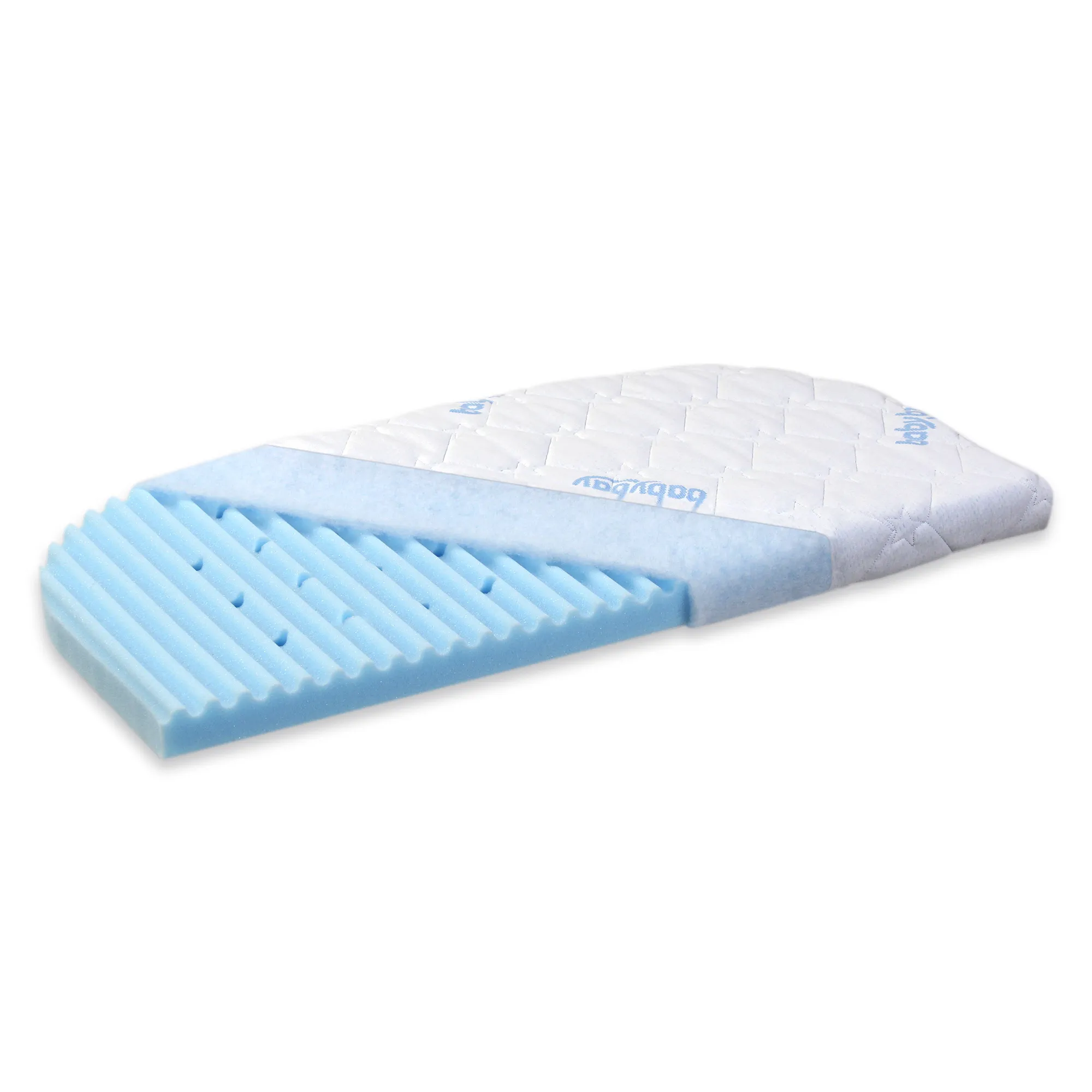
Matching sizes means no guesswork and no spare fabric to bunch up at the corners. The protector sits on firm, purpose-made babybay mattress pads in Classic, Relief, Tranquility and Organic Coco, and the pad keeps its snug fit in the beechwood frame. The textile accessories from babybay carry Oeko-Tex certification, so an outside lab has tested the fabrics near your baby.
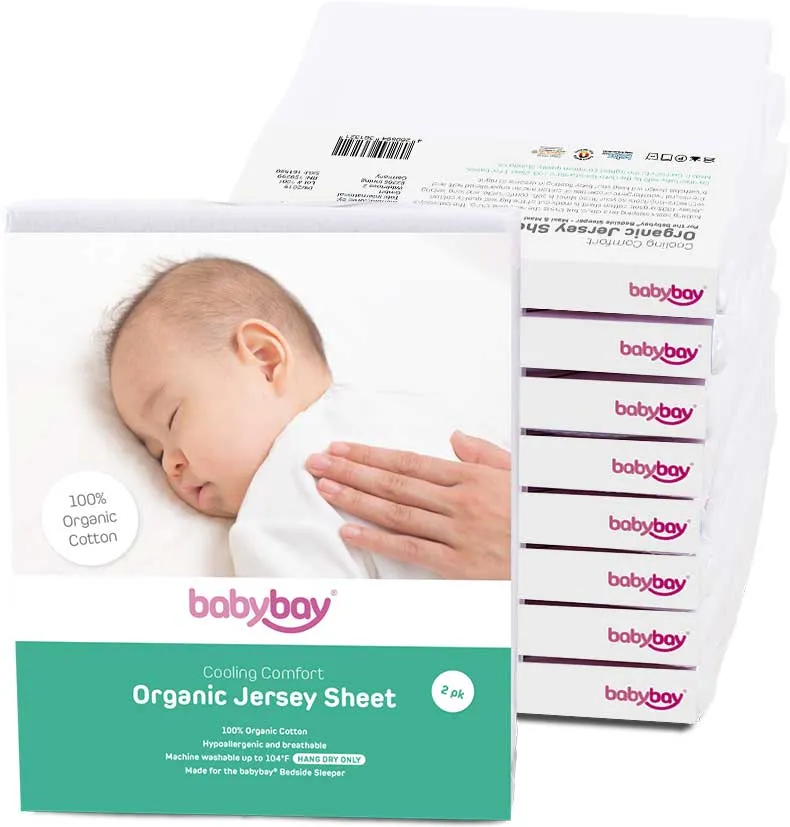
To finish the set, add a jersey or organic jersey fitted sheet in the same size. You can see every option in babybay sheets, covers and protectors, sorted by model.
- babybay Original
- Beds up to 28 in, 32 x 16 in platform, $385. Use the Dry Comfort protector for the Original.
- babybay Maxi
- Beds 10 to 28 in, wider 35 x 19 in platform for one baby, $425. Use the Dry Comfort protector for Maxi and Maxi Tall.
- babybay Maxi Tall
- Boxspring and platform beds up to 34.75 in, 35 x 19 in platform, $485. Same Dry Comfort protector as the Maxi.
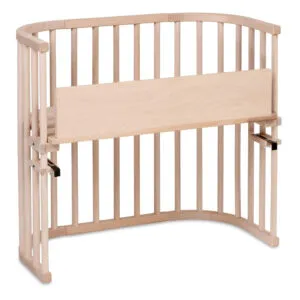
A protector is a small purchase, but it protects the part of the bassinet your baby uses every night. That fits the bigger picture. The babybay Original bedside sleeper is solid European beechwood with water-based finishes, made in Germany, and meets US safety standards from the CPSC and ASTM (the American Society for Testing and Materials). The wood carries a 10-year limited warranty when you register it within 90 days. Look after the pad, and the whole sleeper stays ready for years, including for a later baby.
Not sure which model suits your bed height yet? Compare all three babybay bedside sleepers first, then pick the protector and sheets that match.
QDo you really need a bassinet mattress protector?
Most parents do. Leaks and spit-up soak into foam and natural-fiber pads, and many pads cannot be washed whole. A thin protector under the fitted sheet keeps the pad clean, and you can change it in a minute at night.
QCan a mattress protector make a bassinet unsafe?
Yes, if it is too thick, too big, or placed on top of the fitted sheet. A bulky protector can soften the surface or push the pad away from the frame and open a gap. Use a thin protector cut for your bassinet, fitted under the sheet.
QHow often should you wash a bassinet mattress protector?
Wash it once a week in normal use, and on the same day after any leak or spit-up that reaches it. Follow the care label, use a mild detergent, and dry on low heat to protect the waterproof layer.
QIs a waterproof mattress protector breathable?
Some are and some are not. Protectors with a thin bonded film, such as TPU, under a fabric face block liquid but let body heat and vapor escape. Plain vinyl or plastic sheets trap heat and moisture, so skip them for a baby’s bed.
QHow many bassinet mattress protectors do I need?
Plan on two at least and three if you wash every few days. That gives you one on the bassinet, one in the wash and one spare for nights with several leaks.
QDoes the protector go over or under the fitted sheet?
Always under. Put the protector on the mattress pad first, then pull the fitted sheet over both. Your baby should only touch the fitted sheet.
QWhich protector fits a babybay?
The brand makes Dry Comfort protectors in two sizes. One fits the Original’s 32 x 16 in platform. The other fits the 35 x 19 in platform of the Maxi and Maxi Tall.
Set up the whole sleep space
Find the babybay that fits your bed
Solid European beechwood, made in Germany, meets US ASTM and CPSC standards, with a 10-year limited warranty on the wood. Pick your model, then add the matching pad, sheet and protector.