Summarize this post with:


The short version
- 01
A canopy is for shade and for looks. It does not make sleep safer, and it is not sold as safety equipment.
- 02
It must stay well clear of the sleep surface. Nothing draped, nothing loose, nothing that can fall in.
- 03
It will not keep a determined cat out of a bassinet. A closed door will.
- 04
Shading daytime naps too heavily can work against the body clock you are trying to build.
- 05
Canopy, cover and netting are three different products, and only one of them is what most people mean.
What a Bassinet Canopy Is For
A bassinet canopy is a panel of fabric suspended above and slightly behind the head of the sleeper on a curved rod or holder. It shades one end of the sleep space from overhead light, gives the bassinet a visual anchor in the room, and on a bedside sleeper it softens what is otherwise a fairly plain wooden frame at the side of your bed.
That is genuinely the whole function. It is worth saying clearly because the search results for this question are dominated by listings and threads that imply something more — that a canopy protects, covers or shields. It does not. A canopy is decorative and it manages light. Everything that makes a sleep space safe is happening underneath it, in the mattress, the fit and the fact that the surface is bare.
Definition
Bassinet canopy — A decorative fabric panel held above the head end of a bassinet by a rod or holder, used to shade the sleep space from overhead light. It is an accessory, not a piece of safety equipment, and it is never intended to touch or cover the sleep surface.
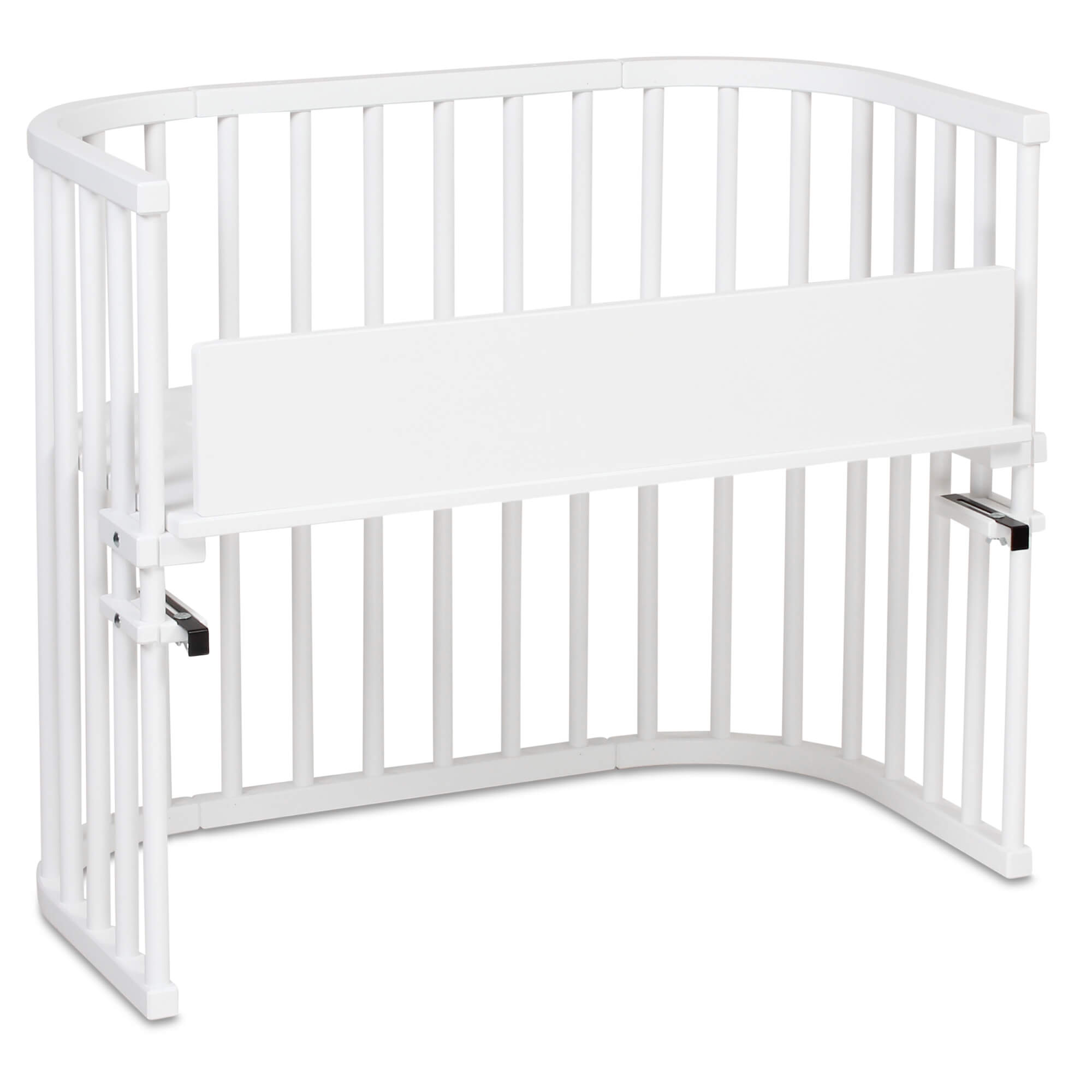
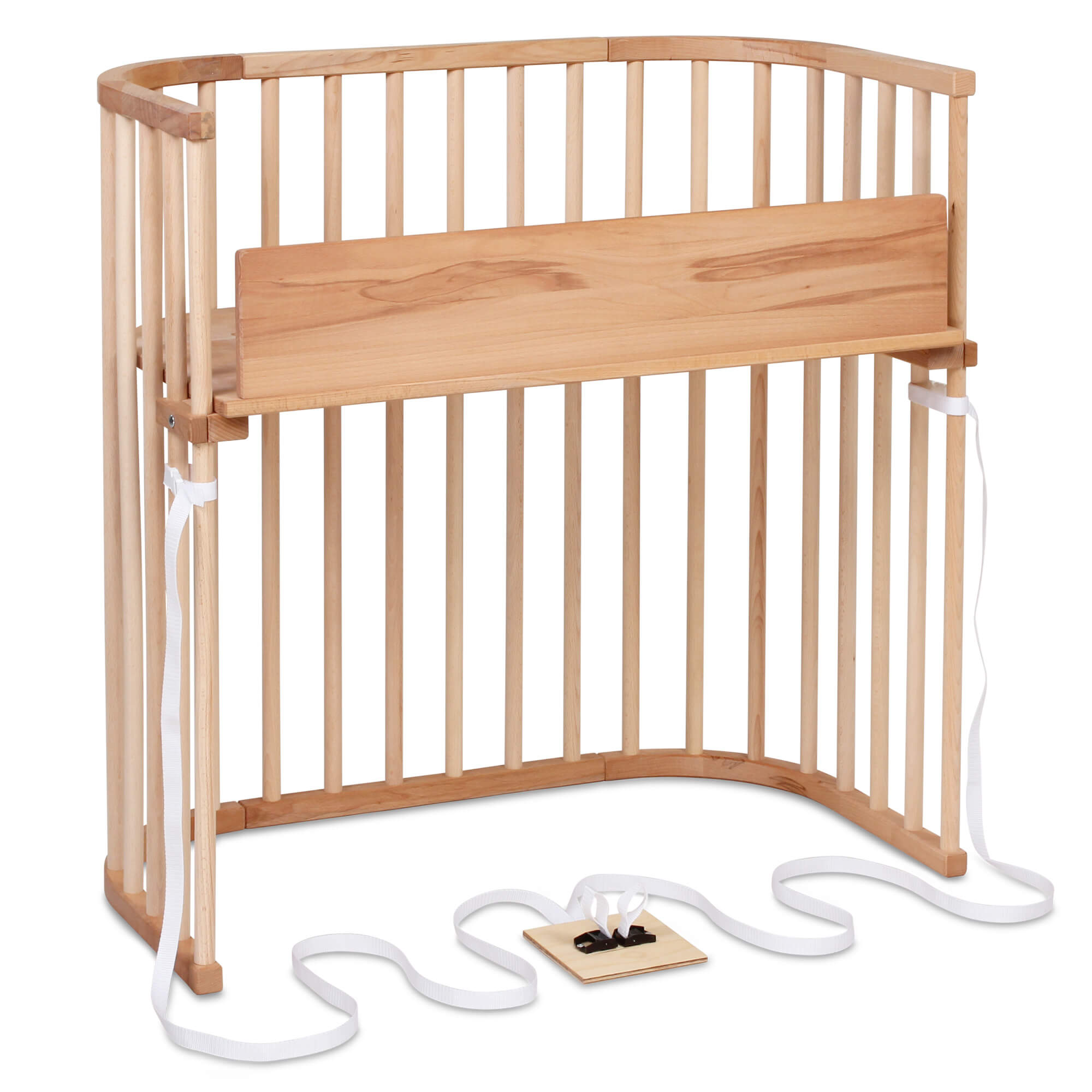
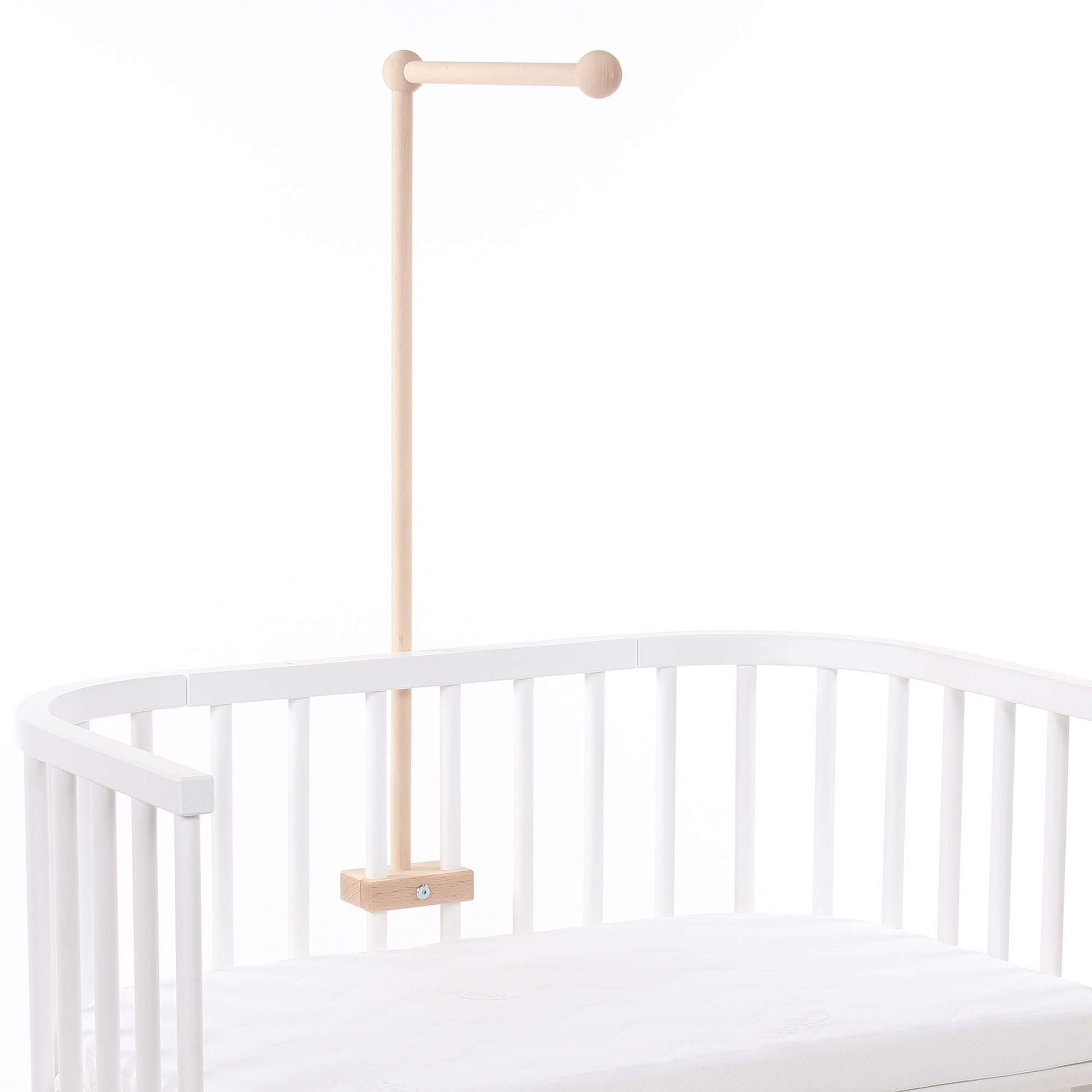
On a babybay, the canopy attaches through a separate canopy holder rather than clipping to the frame, which is the arrangement that keeps the fabric where it belongs — above and behind, never over. The fabric itself comes as a patterned canopy for babybay or in plain colourways, and both are made from the same OEKO-TEX certified textiles as the rest of the accessory range.
If you are still deciding which sleeper you are buying the accessory for, the dimensions and bed-height differences between the three models are set out on our page comparing the babybay Original, Maxi and Maxi Tall. The canopy and holder fit across the range; what changes between models is the bed height they attach beside.
The Safe-Sleep Rules for Anything Over a Bassinet
This is the section that is missing from almost every page about bassinet canopies, and it is the question underneath the question. For parents still choosing the sleep space itself, our comparison of a bassinet vs a crib sets out the trade-offs.
The American Academy of Pediatrics is unambiguous about what belongs in a baby’s sleep space, and its explanation of the 2022 safe sleep policy comes down to the same short list every time: baby on their back, on a firm and flat surface, with a fitted sheet and nothing else. No pillows, no blankets, no bumpers, no positioners, no toys. A canopy is not in that space, and the entire point of the rules above is that it must stay out of it.
So the working principle for any canopy, drape or overhead fabric is simple. It hangs above the sleeper, clear of the mattress, attached firmly enough that it cannot fall or be pulled in. If fabric can reach the sleep surface — because it is too long, because the holder is loose, or because it has been draped forward to darken the space — it has stopped being a canopy and started being loose bedding over a baby’s face.
The second principle is airflow. Overheating is a recognised risk factor in safe sleep guidance, and anything that encloses the space around a baby’s head reduces air movement around it. A canopy that shades one end from the ceiling light does not do that. A canopy pulled around and over the sleeping area does. The difference between the two is entirely about how it is positioned, which is why the attachment matters more than the fabric.
- Position
- Above and behind the head end — never forward over the sleep surface
- Clearance
- Fabric must not be able to reach the mattress, even if it slips
- Attachment
- Fixed to a dedicated holder, checked periodically for tightness
- Airflow
- Air must move freely around the baby’s head at all times
- Remove it when
- Baby starts pushing up on hands and knees, or can reach and pull the fabric
- Never
- Drape it forward to darken the space, or tuck any part of it into the bassinet
The one rule that matters
Nothing hangs over the sleep surface
If any part of the canopy can touch, cover or fall onto the mattress, it must be shortened, re-fixed, or taken off entirely. Loose fabric over a sleeping baby is the hazard that every safe-sleep guideline is written to prevent, and a decorative accessory is never worth an exception.
Check the fixing every few weeks. A holder that has loosened slightly is the most common way a correctly installed canopy stops being correctly installed.
The Cat Question
The top result for this search is, more often than not, a thread of parents asking how to stop the cat getting into the bassinet. So let us answer it directly rather than pretending the question was about interior design.
A canopy will not keep a cat out. It covers one end, it is not fixed down, and a cat that wants the warm, enclosed, elevated spot you have just installed beside your bed will simply go around it or under it. Treating a canopy as a cat barrier is the wrong tool for the job, and worse, it can encourage people to drape it further forward in the hope that it helps — which creates a genuine hazard in pursuit of one that was never real.
What actually works is unglamorous. Keep the bedroom door closed when the room is not occupied, so the sleep space is never available unsupervised. Give the cat a better option elsewhere — a warm, high, enclosed bed in another room, because you are competing with the appeal of the spot rather than simply forbidding it. Make the bassinet unattractive when it is not in use, which for most cats means something on the surface they dislike standing on. And never leave a baby asleep in a room a cat can enter unobserved, which is guidance that predates bassinets by a long way.
Netting is the other thing people reach for here, and it deserves its own caution. Fine mesh netting sold for insect protection is not designed as an animal barrier, will not stop a cat’s weight, and adds fabric over the sleep space. If the concern is genuinely a pet, the door is the answer.
STEP 01Close the door, not the canopy
The bedroom door is the only reliable barrier. If the room is not occupied, the room is shut. This single habit does more than every accessory combined.
STEP 02Offer a better spot
Cats choose warmth, height and enclosure. Provide all three somewhere else in the house before the baby arrives, so the habit is already formed when the sleeper appears.
STEP 03Make the surface unappealing
When the bassinet is not in use, most cats will avoid a surface they dislike underfoot. Remove whatever you use before the baby sleeps there — the sleep surface goes back to bare and firm.
STEP 04Introduce the pet early
Let the cat investigate the sleeper while it is empty and uninteresting, weeks before the baby arrives. Novelty is a large part of the attraction.
STEP 05Never rely on fabric
No canopy, drape or net is a barrier. If you find yourself adjusting fabric to keep an animal out, stop and fix the door instead.
Light, Naps and Day/Night Confusion
Here is the part that surprises people: shading daytime naps can work against you.
Newborns are not born with a settled body clock. It develops over the first few months, and the strongest signal driving it is the difference between day and night. Bright, ordinary daylight during the day and a genuinely dark room at night is what teaches the distinction. A baby napping in a heavily darkened room at two in the afternoon is getting a weaker version of that signal, not a stronger one.
That does not mean a canopy is a mistake. Shading a sleeper from a bright overhead light or from direct sun falling across the head of the bed is useful, and a baby squinting into a ceiling fixture is not going to settle. The distinction is between reducing glare and blacking out the afternoon. The first helps; the second is borrowing from tonight to pay for this afternoon.
The practical version: use the canopy to take the edge off direct light, leave the room otherwise normally lit during the day, and save real darkness for night. If naps are only happening in a blacked-out room, the canopy is not the thing to adjust — the routine is.
Bright days and dark nights are what build a newborn’s body clock. A canopy should take the glare off an afternoon nap, not turn it into night.
babybayCanopy vs Cover vs Netting
Three products, constantly confused in listings and in conversation, doing three different jobs with three different risk profiles.
Three products people call a canopy
| Product | What it does | Where it sits | Safety position |
|---|---|---|---|
| Canopy | Shades the head end from overhead light; decorative | Above and behind, on a holder, clear of the mattress | Fine when correctly fitted and never draped forward |
| Cover | Encloses part or all of the sleep space | Over the opening of the sleeper | Not compatible with safe sleep — restricts airflow and visibility |
| Insect netting | Screens flying insects, typically outdoors or in a stroller | Tented over the opening | Only where genuinely needed, never unsupervised, never as a pet barrier |
The one worth flagging is the cover. Anything that closes over the top of a sleep space reduces air movement and stops you seeing your baby at a glance, and both of those run directly against the guidance that the US Consumer Product Safety Commission sets out in its safe sleep guidance for cribs and infant products, which is that a sleep space should be bare, firm and clearly visible. If a product’s purpose is to enclose your baby, it is not an accessory you need. Parents who arrived at canopies while shopping the premium end are usually weighing cost as much as features, and our look at SNOO alternatives worth the money sets out what that premium actually buys.
This is also why babybay sleepers ship without netting of any kind. The frame is open on the bed side by design — that is the entire point of a bedside sleeper, and it is the arrangement described in our overview of bedside sleepers and co-sleeping bassinets. Adding mesh to the one side that is meant to be open defeats the product.
How a Canopy Attaches, and When to Take It Off
The attachment is the safety-relevant part, and it is the part listings rarely describe properly.
A canopy is not clipped to the side rails or tied to the frame. It is carried on a dedicated canopy holder that fixes to the sleeper and arcs up and back, so the fabric hangs behind and above the head end under its own weight. Fitting it takes a few minutes with the holder’s fixings tightened properly, and it should be firm enough that a deliberate tug does not move it. If it can be pulled out of position by hand, it can be pulled out of position by a baby who has just discovered they have hands.
Which brings us to removal. The canopy comes off when your baby starts pushing up onto hands and knees, or reliably reaches above their own head, whichever happens first. For most babies that is somewhere between four and six months, and it is the same developmental milestone that signals the end of bassinet use generally. Do not wait for the first grab. The point of removing it is to be ahead of the reach, not level with it.
It also comes off any time it is not earning its place — during a heatwave, in a room with no overhead light problem, or whenever you find yourself adjusting it rather than ignoring it. An accessory that needs managing is an accessory that is due to come off.
Questions Parents Ask About Bassinet Canopies
QWhat is a bassinet canopy actually for?
Shade and appearance. It hangs above the head end of the sleeper on a holder and takes the glare off an overhead light or direct sun, and it gives the bassinet a finished look in the bedroom. It is not a safety product, it does not protect the baby from anything, and it is never meant to touch or cover the sleep surface.
QIs it safe to leave a canopy over a sleeping baby?
It is safe when it is fitted correctly, which means suspended above and behind the head end on a firm holder, clear of the mattress, with air moving freely around the baby’s head. It is not safe if any part of it can reach the sleep surface, if it has been draped forward to darken the space, or if the fixing has loosened. Check the attachment every few weeks.
QWill a canopy keep the cat out of the bassinet?
No. A canopy covers one end, is not fixed down, and a cat will go around or under it without difficulty. Treating it as a barrier is also risky, because it tempts people to drape more fabric forward. The reliable answer is a closed bedroom door when the room is unoccupied, plus a warmer and higher cat bed somewhere else in the house.
QCan a canopy make the bassinet too warm?
It can if it is positioned wrongly. A canopy shading one end from the ceiling has no meaningful effect on temperature; a canopy pulled around and over the sleeping area restricts airflow around the baby’s head, and overheating is a recognised risk factor in safe sleep guidance. Keep it above and behind, and take it off entirely in hot weather if you are unsure.
QIs mosquito netting safe over a newborn?
Use it only where insects are a genuine problem, only while you can see the baby, and never as a substitute for supervision or as an animal barrier. Fine netting adds fabric over the sleep space and is not designed to bear weight. Indoors, in an ordinary bedroom, it is additional material over a baby for no real benefit.
QDo you need a canopy for daytime naps?
No, and heavily darkening daytime naps can slow down the day-night rhythm you are trying to establish. Bright ordinary daylight during the day and a dark room at night is the signal that builds a newborn’s body clock. Use a canopy to reduce glare from a light fixture or direct sun, not to turn the afternoon into night.
QWhen should the canopy come off?
When your baby starts pushing up onto hands and knees, or can reliably reach above their own head — for most babies somewhere between four and six months. Remove it before the first grab rather than after it. That milestone generally coincides with the end of bassinet use anyway.
Where better sleep is born
Find the babybay that fits your bed
Solid European beechwood, water-based finishes, no plastic and no netting, meeting ASTM and CPSC requirements, with a ten-year warranty. Three models, sized by your bed height.